

by ANN ZAINUDDIN
STEPPING into the elegant venue on a warm morning feels less like attending a formal press assignment and more like walking into a bustling family kitchen on the eve of a grand celebration. The air inside is thick with a comforting, deeply layered aroma: The fragrance of crushed herbs, warm citrus and the subtle, sweet scent of cinnamon mingling with freshly baked pastry.
This sensory welcome set the perfect stage for the launch of Turkish Cuisine Week 2026, celebrated globally from May 21 to 27. Under the international auspices of First Lady Emine Erdoğan, this year’s iteration moves beyond just showcasing regional flavors. Instead, it invites the world to sit down at “The Heritage Table” (Bir Sofrada Miras), celebrating the historical lineages and communal stories woven into a cuisine shaped over centuries.
For the host, Emir Salim Yüksel, the Ambassador of the Republic of Türkiye to Malaysia, the exclusive media luncheon carried a deeply personal, bittersweet weight. Addressing the gathered journalists and guests, the Ambassador revealed that this event marked a poignant final milestone in his diplomatic journey in the country.
“I would like to say that this is going to be my last speech because next week I am leaving Malaysia, and this is going to be my farewell gathering. So, thank you. I would like to thank all of you for receiving me,” Yüksel shared warmly, his voice carrying a touch of emotion.
This revelation cast a beautiful, nostalgic light over the afternoon. It underscored the very essence of the gathering, which is the idea that people come together, share a finite moment in time over a meal, and carry those memories with them across borders long after the table is cleared.
The Oldest Language of Togetherness
The spirit of Turkish hospitality, known for its aggressive generosity and deep communalism, was the true centrepiece of the afternoon.
As the Ambassador stated, food in Türkiye is not merely sustenance; it is a primary language of socialisation, deeply embedded with ancient idioms, rituals and traditions that dictate everyday life.
With a twinkle in his eye, Yüksel paused during his speech to offer the media a few “insider hints” for the interactive culinary trivia challenge scheduled later in the afternoon, playfully warning the crowd not to blame him if they missed out on the prizes.
He shared the delightful Turkish idiom used when someone unexpectedly walks into a home just as a meal is being placed on the table: Kaynanan seviyormuş, which means your mother-in-law likes you. In Turkish culture, this means you have arrived at the absolute perfect, most blessed moment.
He spoke at length about the rich history of Türkiye’s gastronomy, noting that the country proudly boasts three UNESCO-designated “creative cities of gastronomy”, Gaziantep, Hatay and Afyonkarahisar. He also explained the legendary “Iskender Kebab”, saying that its true, world-famous birthplace is Bursa, the historic first capital of the Ottoman Empire.
Central to the afternoon’s theme was the concept of the table of Halil İbrahim. This thousand-year-old expression symbolises an abundant, highly generous table where no one is ever turned away, and where food is shared boundlessly to foster solidarity.
Mastery on Display: From Kitchen to Table
The heart of the afternoon shifted to a live culinary demonstration led by Chef Leyla Özdemir, the head chef at the Turkish Embassy. With deft, practiced movements, Özdemir walked the media through the precise craftsmanship required to prepare two pillars of traditional Turkish home cooking: zeytinyağlı yaprak sarması, which is olive oil-stuffed grape leaves and mantı, the iconic Turkish meat dumplings.
Watching Özdemir roll the grape leaves was a lesson in pure patience and heritage technique.
The dish is a staple of the famous appetizer (meze) culture, which consists of small plates of hot and cold dishes intended to stimulate the palate while enjoying a good chat.
This specific recipe blends tart grape leaves with a rich, complex filling of rice, sweet currants, pine nuts, and an aromatic blend of dried mint, chopped tomatoes, onions, cinnamon, and black pepper. Simmered for about two hours over low heat in golden olive oil and fresh lemon slices, the result is a beautifully balanced, melt-in-your-mouth parcel.
Next came the mantı. Özdemir demonstrated how the dough must be rolled incredibly thin before being cut into tiny squares. These miniature parcels are then stuffed with a simple, seasoned mixture of minced meat and finely chopped onions, pinched at the corners to form distinct, tiny pockets. Once boiled to a perfect, delicate tenderness, they are blanketed in a multi-layered sauce made of thick garlic yogurt, vibrant tomato paste, and warm oil infused with red pepper flakes.
Tasting it firsthand is an extraordinary experience; the initial cooling contrast of the garlic yogurt quickly gives way to the warm, comforting richness of the savory meat filling inside the delicate pasta shell. It is a dish that reflects historical themes of migration and travel across the Anatolian plains, yet feels entirely comforting on the tongue.
This dedication to culinary heritage extended beyond the walls of the residence earlier in the week through a specialised workshop organised in collaboration with Le Cordon Bleu. The hands-on session brought together 40 culinary students for an immersive introduction to traditional Turkish techniques. Led by Özdemir, the workshop allowed local students to experience ancestral methods firsthand.
Mustafa Korkutata, the Cultural and Tourism Affairs Counsellor at the Embassy, emphasised that these initiatives build a deeper understanding of heritage dishes, such as the slow-cooking of kuzu tandır, a slow-roasted lamb and a UNESCO-listed wheat and meat porridge called keşkek, which symbolises shared celebration and collective effort.
A Sensory Symphony at the Buffet
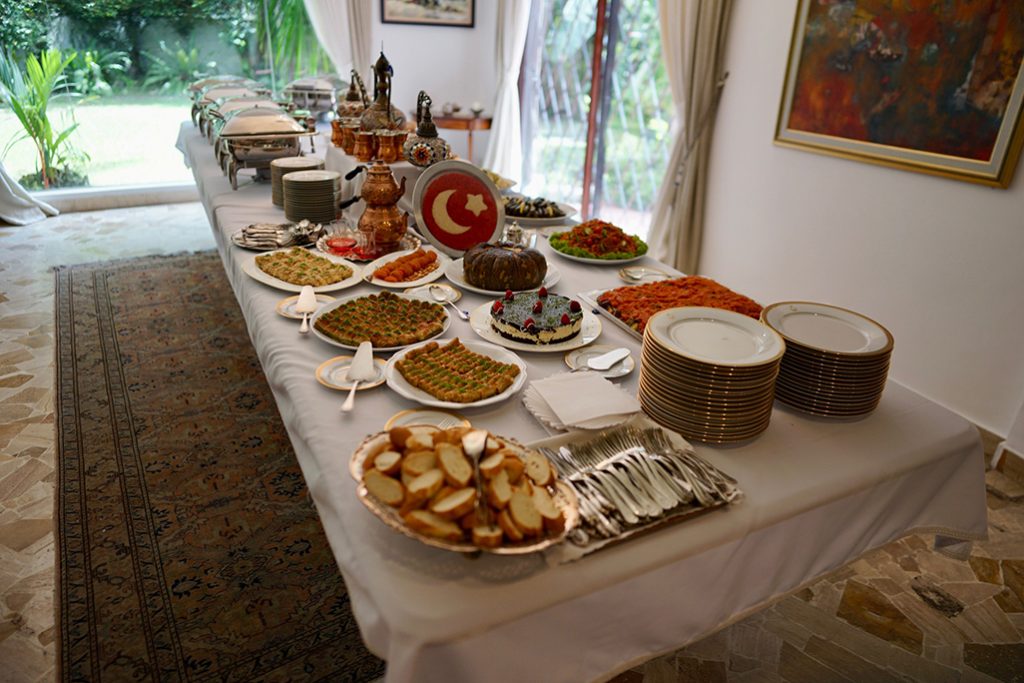
When the gates to the full buffet line finally opened, it became abundantly clear that the Ambassador’s promise of an inclusive, bountiful table was fully realised.
The spread was a magnificent showcase of a culinary culture that bridges Europe and Asia, effortlessly catering to meat lovers, vegetarians and vegans alike.
The banquet table was meticulously structured to mirror the chronological progression of an authentic Turkish feast.
Guests began with cold mezes, including smooth hummus and vibrant eggplant salads, which cleared the palate before moving on to heavy, warming stews.
The buffet layout highlighted a vast regional diversity, drawing flavors from the abundant variety reminiscent of a traditional, leisurely Turkish breakfast, kahvaltı, to hearty Central Anatolian grain salads and rich seafood traditions from the Black Sea coast.
The true showstopper of the afternoon, however, was found at the dessert station.
Among a variety of traditional sweets, the antep baklava, one of Türkiye’s seven distinct products with European Commission (EC) geographical indications, stood supreme. Originating from the imperial kitchens of Istanbul’s Topkapı Palace, where pastry chefs vied to create the thinnest layers for the Sultans, eating a piece of authentic modern baklava remains a masterclass in texture.
The top layers consist of paper-thin, translucent sheets of phyllo dough, baked to a deep, golden crisp that shatters satisfyingly at the touch of a fork. Beneath the crunch lies a rich, densely packed layer of bright green, premium pistachios, all held together by a perfectly calibrated, aromatic sugar syrup that infuses the pastry without making it soggy.
Paired with a bottomless glass of traditional, freshly brewed Turkish tea, çay, served in its iconic tulip-shaped glass, the dessert was a sublime conclusion to the feast.
A Lasting Impression
As the luncheon wound down to the sounds of soft chatter, enthusiastic laughter over the trivia challenge, and the distribution of rewards, there was a palpable sense of warmth in the room.
Guests lingered over their traditional Turkish coffee. This final beverage ritual is an art form in itself, where unfiltered coffee grounds are boiled in a small brass pot called a cezve and served at a scorching temperature. In accordance with time-honored customs, it was presented alongside a small glass of cold water to cleanse the palate and a square of sweet Turkish delight to balance the brew’s deep bitterness.
Ultimately, the afternoon successfully demonstrated that a heritage recipe is never just a list of ingredients; it is a living anchor for connection.
The event provided a beautiful, memorable space to bid a fond güle güle, meaning farewell to Ambassador Yüksel, leaving everyone at the table with a deeper appreciation for the stories that connect human beings across time, geography and borders.
The post Celebrating timeless stories of Turkish cuisine appeared first on The Malaysian Reserve.