Auto Added by WPeMatico
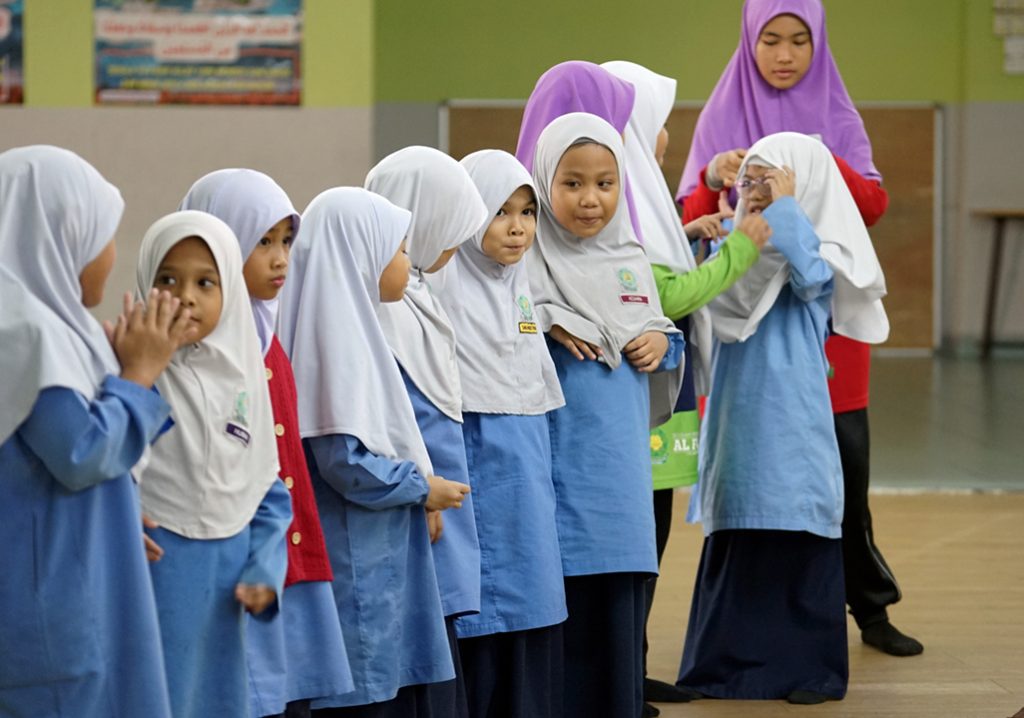

Before we ask 6-year-olds to sacrifice a year of their childhood to the altar of competitiveness, we should first ensure the education system works

LAST year, Suri woke up and demanded a metal detector. She was six years old and, from what I could gather, considerably more rational than your average mid-level bureaucrat — though, to be fair, that’s a bar so low you could trip over it in the dark.
Evidently inspired by Minecraft, she presented a remarkably coherent, if slightly fantastical, multi-point fiscal proposal for why we should procure her a professional-grade detector. She wasn’t looking for “play”, mind you; she was looking for the yield.
She had correctly deduced that the local park was essentially a low-interest savings account stuffed with lost coins and discarded jewellery, and she was the only one with the technological foresight to start making withdrawals.
Suri possesses the kind of terrifyingly mature cognitive processing power that makes a parent wonder if they’re being outmatched. She knows every phone lock code in the house. She can successfully litigate with Grandma over why she needs to duplicate her toy collection — one set for the home office and one set at Grandma’s for “strategic visits”.
When she finally marched off to Standard 1 this year at the ripe old age of seven, I waited for the grand epiphany. I waited for that “Aha!” moment where the extra year of waiting would reveal itself as either a stroke of developmental genius or a tragic waste of human capital.
I’m still waiting.
As it turns out, entering school at seven didn’t turn her into a Nobel laureate overnight, nor did it leave her hopelessly behind in the global race to produce the world’s most efficient spreadsheets. She was just…a kid in a uniform that was slightly too big for her, trying to navigate the canteen.
Naturally, this hasn’t stopped our Ministry of Education (MOE) from deciding that the real problem with Malaysia isn’t the crumbling infrastructure or the fact that we change our national teaching philosophy more often than a TikTok influencer changes outfits.
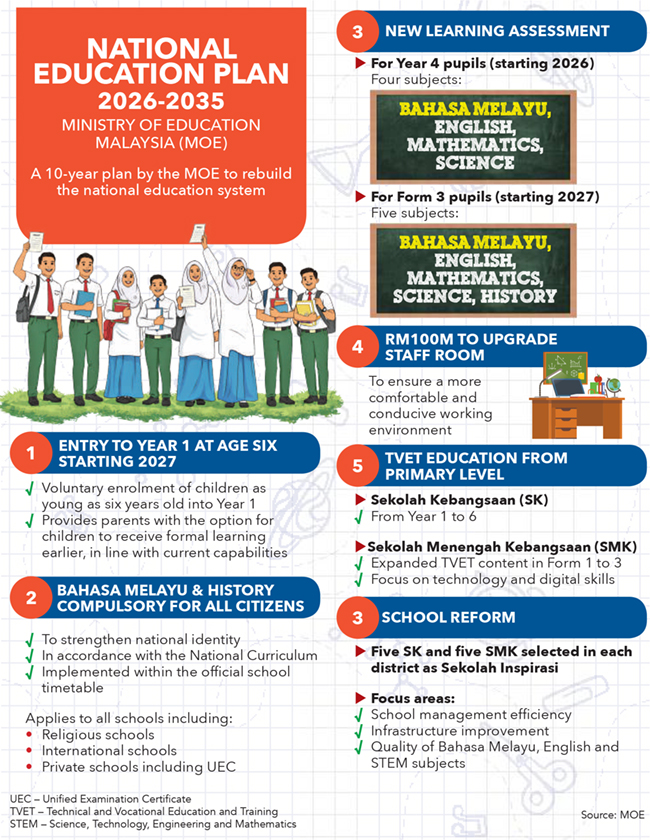
No, the grand poohbahs have decided the problem is that we aren’t getting these kids into “The System” fast enough. Starting in 2027, the government is inviting six-year-olds to the party.
In a country where “Kiasu-ism” is practically an Olympic event, this is the equivalent of firing a starting pistol in a room full of over-caffeinated parents. The government calls it “optional”. That is a hilarious misunderstanding of the Malaysian psyche. In the hands of an aggressive parent, “optional” is just code for “if you don’t do this, your child will end up delivering satay on a moped”.
We can already see the Kiasu juices beginning to simmer. Soon, we’ll have five-year-olds in Standard One entrance-exam bootcamps, clutching lattes and flashcards, prepared to battle for a seat in a classroom that probably hasn’t had a functioning ceiling fan since the late nineties. We are turning childhood into a high-stakes arms race, all because we think an extra 365 days of staring at a chalkboard is the secret ingredient missing from our GDP.
But let’s look at “The System” these six-year-olds are being rushed into. It is a system with a history of “policy whiplash” so severe it could snap a giraffe’s neck. To understand the scepticism of the Malaysian public, one only needs to recall the “Great Math and Science Flip-flop”.
For years, we taught these subjects in English (PPSMI) in a frantic bid to be “Global”. Then, just as students finally learned to say “Hypotenuse” without flinching, the ministry pivoted — deciding, actually, never mind — we’re doing it in Malay now to be “National”.
Then came the Dual Language Programme (DLP), a middle-ground compromise that left some schools in English, some in Malay, and most in a state of permanent linguistic vertigo. We treat our national curriculum like a software update that we “test in production” on millions of live human beings. It’s not education; it’s a beta test with no “undo” button.
The government’s logic for early entry is that it “aligns us with global standards”. It’s the classic administrative reflex: “We think it is a good idea, so let’s just do it and figure out the consequences once the press release is cold.”
Our teachers are already drowning. They are administrators, data entry clerks, amateur psychologists, and, on the rare occasion the paperwork allows, educators. Now, we are asking them to manage a “double cohort” in 2027 — a demographic bulge of seven-year-olds and eager six-year-olds all crammed into the same space. It’s a recipe for a logistical meltdown that would make a Kuala Lumpur (KL) flash flood look like a spilt glass of water.
The ministry tells us not to worry; they have a “New 2027 Curriculum”. They have “Inspiration Schools”. They have “Diagnostic Screenings”. They have everything except a clue.
I have a better idea.
How about we start from the bottom? Before we ask a six-year-old to sacrifice a year of her childhood to the altar of national competitiveness, how about we make sure her school has a library that contains books published in this millennium? How about we ensure that the teacher-to-student ratio isn’t “One versus The Hunger Games”? How about we decide, once and for all, what language we’re actually teaching in before we start the clock a year early?
Change whatever you want to change but fix the floor before you try to raise the ceiling. If you want our children to be the future, stop treating them like lab rats in a maze designed by people who haven’t stepped inside a government school classroom since the disco era.
Suri never got her metal detector, on account of us not being “crazy rich”. She got a Meccano set instead, and she spends afternoons watching Minecraft shows, learning about cantilevers, structural integrity and the systemic instability of imaginary foundations.
She’s learning more from that “waste of time” than she ever will from a rushed curriculum managed by an overwhelmed system. Let the kids be six. We have the rest of their lives to turn them into victims of the bureaucracy.
- ZB Othman is an editor of The Malaysian Reserve.
- This article first appeared in The Malaysian Reserve weekly print edition
The post Six is the new 7 appeared first on The Malaysian Reserve.