
Auto Added by WPeMatico


by SHAUQI WAHAB
THE ongoing tensions between Iran, Israel and the United States is marking a turning point in global oil trade, raising questions about whether the long-standing petrodollar system may face a serious challenge.
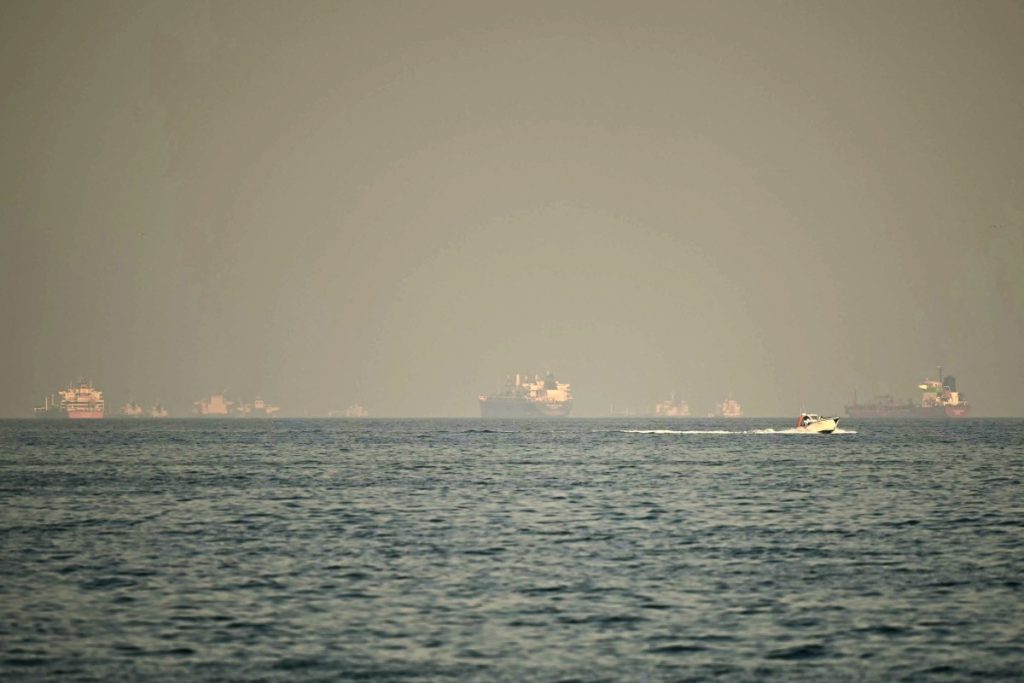
Iran closed the straits on March 4 and threatened vessels attempting to pass through the key shipping route.
However, on March 14, it was reported that it is considering allowing restricted oil tanker passage through the Strait of Hormuz only if shipments are settled in Chinese yuan.
This move follows intensified regional conflict and aims to circumvent US dollar dependency, amid reports that nearly 20% of global oil supply passes through this route daily.
International Islamic University Malaysia (IIUM) economist Azhar Mohamad said about 80% of global oil transactions are conducted in US dollars, an arrangement established in the 1970s that reinforced global demand for the dollar and strengthened Washington’s financial influence.
“This condition (transactions in Chinese yuan), if formalised, would represent the most significant challenge to the petrodollar system in its 52-year history, striking at the financial architecture that underpins American global power rather than at US military assets,” he told The Malaysian Reserve (TMR).
Azhar argued that the proposal differs from earlier calls for de-dollarisation because it links access to a critical global energy chokepoint with the currency used in trade.
If implemented, this could lead to a dual oil market structure in which shipments paid in yuan pass through Hormuz more easily while dollar-denominated cargoes face delays or alternative routes.
He noted that elements of such a parallel system may already be emerging.
Since late February, Iranian crude shipments to China have reportedly continued through the strait using shadow fleets under the protection of the Islamic Revolutionary Guard Corps, while other international shipping has faced restrictions.
Some vessels from countries such as India, Turkey and Saudi Arabia have also been selectively allowed to pass.
Azhar said the development could gradually reduce global reliance on the dollar if energy exporters and importers begin diversifying currency use and financial reserves.
A sustained shift toward yuan-denominated oil trade could eventually weaken demand for US dollars and raise borrowing costs for Washington.
At the same time, the situation presents strategic challenges for China, the world’s largest oil importer, as nearly half of its energy consumption comes from the Gulf region, giving Beijing a strong incentive to support de-escalation to maintain stable supplies.
Azhar also pointed out that reopening the strait by force would be complex for the US due to Iran’s military capabilities in the narrow waterway, including mines, missiles, submarines and drones, meaning restoring shipping could take weeks or even months.
Meanwhile, oil prices have already reacted sharply to the geopolitical uncertainty.
The global benchmark Brent crude oil rose from US$71.32 (RM280.54) per barrel on Feb 27 to US$77.24 (RM303.82) two trading days later and has since surpassed US$100 as the conflict persists.
Despite these developments, Azhar cautioned against concluding that the petrodollar system is close to collapse.
“It would be analytically premature to conclude that the petrodollar system is imminently at risk of collapse,” he said.
However, he stressed that the current crisis represents the most concrete operational challenge to dollar dominance in energy markets since the system was established.
“Previous de-dollarisation discussions were theoretical. This one comes with a chokepoint, a shadow fleet, an operational payment system, and a geopolitical crisis that has already lasted weeks with no clear resolution in sight,” he said.
Azhar added that whether the situation becomes the starting point of a broader shift away from the petrodollar will depend largely on how long the conflict lasts and how major oil producers and consumers respond.
Yuan-based oil trade may diversify finance but risks new dependencies
A potential shift toward yuan-denominated oil trade could accelerate the development of financial arrangements outside the traditional US-led system, however alternatives do not automatically mean improvements.
Institute for Democracy and Economic Affairs (Ideas) economist Dr Carmelo Ferlito said greater currency competition could create opportunities for diversification and reduce reliance on the US dollar, although it may also fragment the global financial system and increase uncertainty.
“The real question is not whether the world moves away from a US-dollar-dominated system, but toward what kind of system it moves,” he told TMR.
He said while some oil-exporting countries may accept yuan to strengthen trade ties with China, most are likely to remain cautious about holding large reserves in the currency due to concerns over capital controls and policy centralisation.
He said the US dollar remains dominant largely because it is supported by deep financial markets, institutional credibility and a system where policies can eventually be corrected through political change.
For energy-importing economies in Asia and the Global South, yuan-denominated oil trade could lower conversion costs and reduce exposure to dollar volatility when trade with China is significant.
However, Ferlito warned that this could also deepen reliance on Chinese financial institutions and policies rather than creating genuine financial independence.
“It may simply replace one dependency with another, because greater use of the yuan often means greater reliance on Chinese banks, Chinese payment systems, and ultimately Chinese policy decisions,” he added.
US dollar dominance may decline amid geopolitical tensions
Bank Muamalat’s chief economist Afzanizam Abdul Rashid highlighted that the US dollar’s share of global foreign exchange reserves has declined from 71.1% in 1Q 1999 to 56.9% in 3Q 2025, signaling a gradual shift away from dollar dominance.
He said the dollar’s performance during the ongoing Iran conflict has been lacklustre, reflecting how de-dollarisation is increasingly intertwined with geopolitics.
“Despite that, the share of Chinese yuan to total foreign exchange reserves globally has been relatively small at 1.93% as of 3Q2025,” he said.
Afzanizam pointed out that China’s capital markets remain relatively closed with capital controls, and concerns over governance, transparency, and rule of law may limit global investor confidence.
He added that while the transition away from the US dollar may take time, current trends suggest the greenback’s dominance is likely to weaken, especially as geopolitical developments accelerate alternatives and reshape global financial dynamics.
The post Hormuz crisis raises questions over petrodollar dominance appeared first on The Malaysian Reserve.