

The time has come for the US, and much of the world, to reassess where China stands in the global order
 ONE telling takeaway from US President Donald J Trump’s visit to China last week was just how dramatically the global geopolitical balance has shifted. The US is no longer the undisputed sheriff in town. It now faces a formidable rival in China, one confident enough to meet Washington not from a position of deference, but increasingly as an equal.
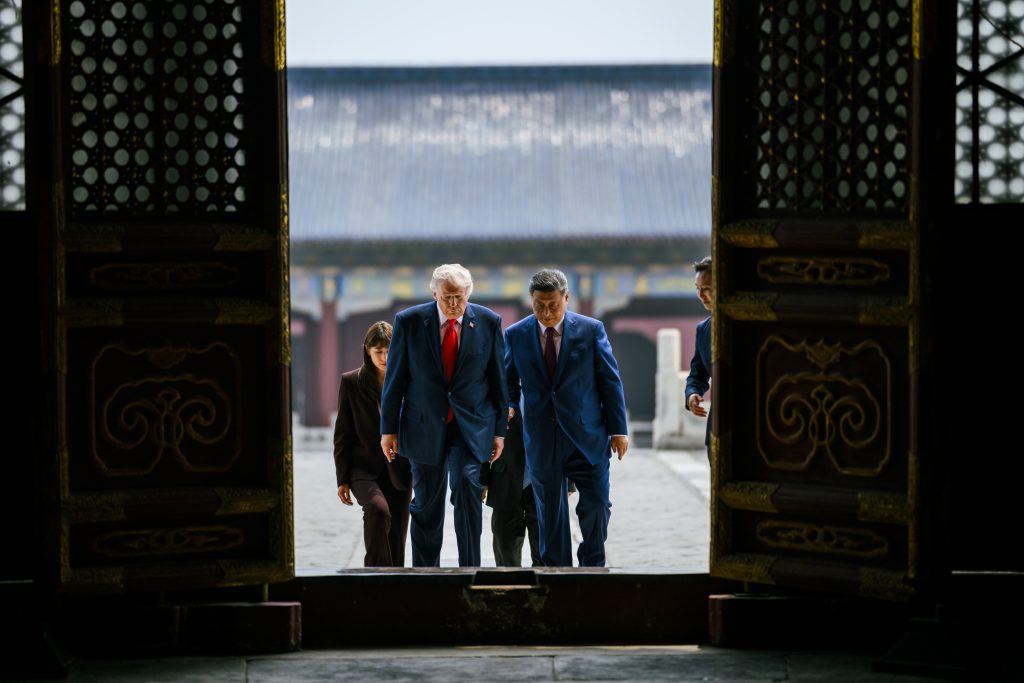
Trump met Chinese President Xi Jinping face-to-face on May 14 in what appeared to be a meeting between two leaders on equal footing. The world has not witnessed many such moments since the collapse of the Soviet Union left the US as the sole superpower.
The two leaders last met in Busan, South Korea, seven months ago, shortly after Trump’s whirlwind visit to Kuala Lumpur for the ASEAN summit. That Busan meeting, in hindsight, now appears more consequential than many first realised. It was not merely another bilateral engagement, but perhaps a moment when the limits of US pressure on China began to show.
In an earlier commentary, Busan: China’s quiet inflection point, I argued that the Oct 30 summit, which took place amid a barrage of tariff threats and economic brinkmanship, marked a strategic turning point. Trump arrived hoping to project strength. Xi left looking calm, composed and increasingly vindicated in his long-term game.
Yet Beijing still rolled out the red carpet for Trump in a manner usually reserved only leaders it considers strategically important. The two men dined on Beijing roast duck, lobster and pan fried pork buns at lavish state banquets before concluding their final working lunch over kung pao chicken and brownies.
Xi even hosted Trump at Zhongnanhai, the Communist Party leadership compound often described as China’s equivalent of the White House. Trump also became the only second sitting US president to formally visit the Temple of Heaven, after Gerald Ford in 1975.
In his opening remarks, Xi declared that the world had arrived at a “new crossroads”, emphasising the importance of cooperation between the world’s two largest economies. He went further, saying China’s “great reju- venation” and Trump’s Make America Great Again (MAGA) vision could coexist.
Both leaders stressed the global importance of stable ties, with Xi warning they must “never mess it up”, unusually direct words aimed at a US president known for unpredictability.
If anything, the summit appeared to strengthen China’s hand. Trump was accompanied by more than a dozen major US corporate heavyweights, including Tesla Inc CEO Elon Musk, Nvidia Corp CEO Jensen Huang and Apple Inc CEO Tim Cook. Their presence underscored how deeply major US corporations remain tied to the Chinese market despite years of political rhetoric about decoupling. As of writing, Trump appears to have left Beijing with few obvious strategic wins.
One detail worth noting: Trump requested for this trip.
Many observers now view the summit less as a display of friendship and more as an exercise in managing a rivalry neither side can afford to escalate recklessly. Across the ideological spectrum, analysts broadly agree the visit signalled a shift away from open confrontation towards transactional coexistence.
Trade stabilisation, large Chinese purchases of US goods and energy discussions linked to the Iran conflict emerged as key outcomes, while Taiwan remained the unresolved fault line hanging over the relationship. Beijing, meanwhile, projected far greater confidence than during Trump’s first presidency, presenting itself not as a subordinate power, but increasingly as Washington’s equal.
Now, the time has come for the US, and much of the world, to reassess where China stands in the global order.
Robert A Pape, a political science professor at University of Chicago, recently offered a sharp assessment of China’s trajectory. He argued that China is no longer merely catching up to the West, but is increasingly defining the next generation of consumer and industrial technology. More importantly, he noted how artificial intelligence (AI) is being integrated across entire sectors of the Chinese economy at remarkable speed.
“China is massively integrating AI into electrification, robotics, infrastructure, cities and manufacturing to uplift whole regions, not just isolated pockets,” he said. “They have seas of electric vehicles (EVs) beyond Tesla that we cannot even buy in the US.”
Pape noted how China is deploying innovations at scale.
“China is inventing new widgets, but then diffusing them massively across sectors and regions. They’ve uplifted tens of millions of people in just a few years. What have we done for places like Pennsylvania and the Rust Belt?” he asked.
For decades, the Rust Belt formed the industrial backbone of the US, stretching across states such as Ohio, Michigan, Pennsylvania, and Illinois. Once powered by steel mills, auto plants and thriving factory towns, the region began sliding into decline from the 1970s as industries moved overseas and manufacturing jobs disappeared. Shuttered factories and struggling communities eventually turned the Rust Belt into a symbol of American economic anxiety and political discontent.
In an appearance on the independent YouTube programme Breaking Points, Pape described what he recently witnessed in China.
“The robotics assembly lines? You cannot even find them on Google. They are not out there bragging or talking smack like we do. They are staying under the radar and eating our lunch.”
- Habhajan Singh is the corporate editor of The Malaysian Reserve.
- This article first appeared in The Malaysian Reserve weekly print edition
The post Xi stands toe to toe with Trump appeared first on The Malaysian Reserve.

 IN A world that often speaks of justice and human rights, Palestine remains one of the clearest litmus tests of international moral consistency. More than seven decades on, the crisis continues without a meaningful political resolution.
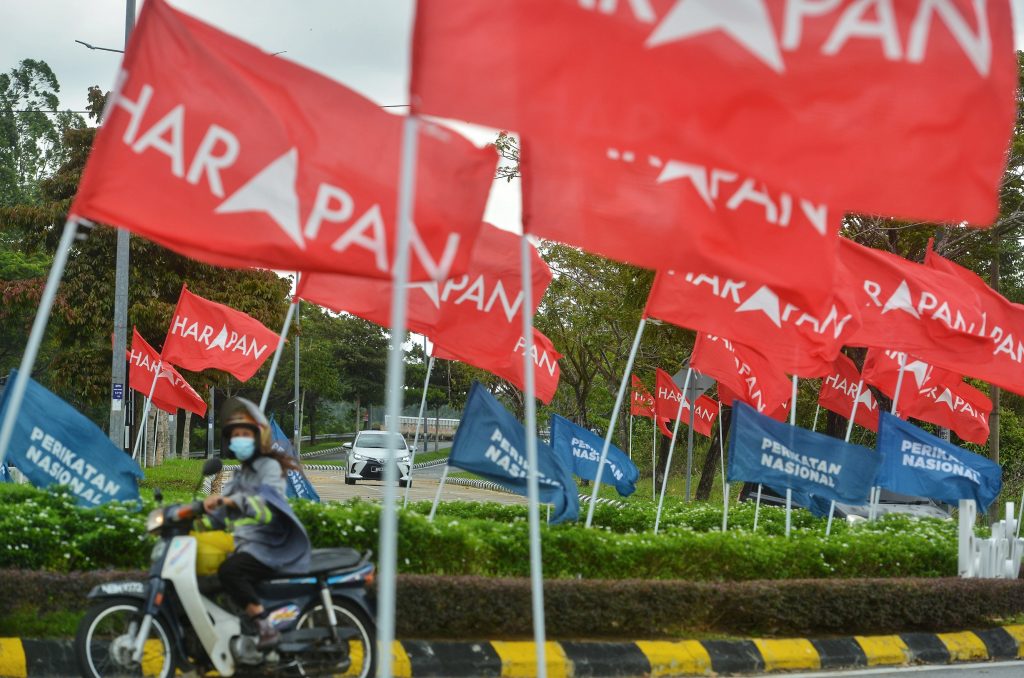
 PRIME Minister (PM) Datuk Seri Anwar Ibrahim’s recent statement that Pakatan Harapan (PH) is prepared to contest head-to-head nationwide should Barisan Nasional (BN) choose to move independently in the Johor state election signals more than ordinary coalition bargaining. It reflects a deeper recalibration within the Madani Unity Government, where political cooperation is increasingly shaped not only by electoral arithmetic, but by questions of long-term survival, leadership leverage and institutional credibility.
 (@iaeaorg) May 17, 2026