


by AUFA MARDHIAH
MERCY Malaysia is calling for stronger governance and accountability across the humanitarian and non-governmental organisation (NGO) sector as public confidence comes under pressure from recent allegations involving civil society groups.
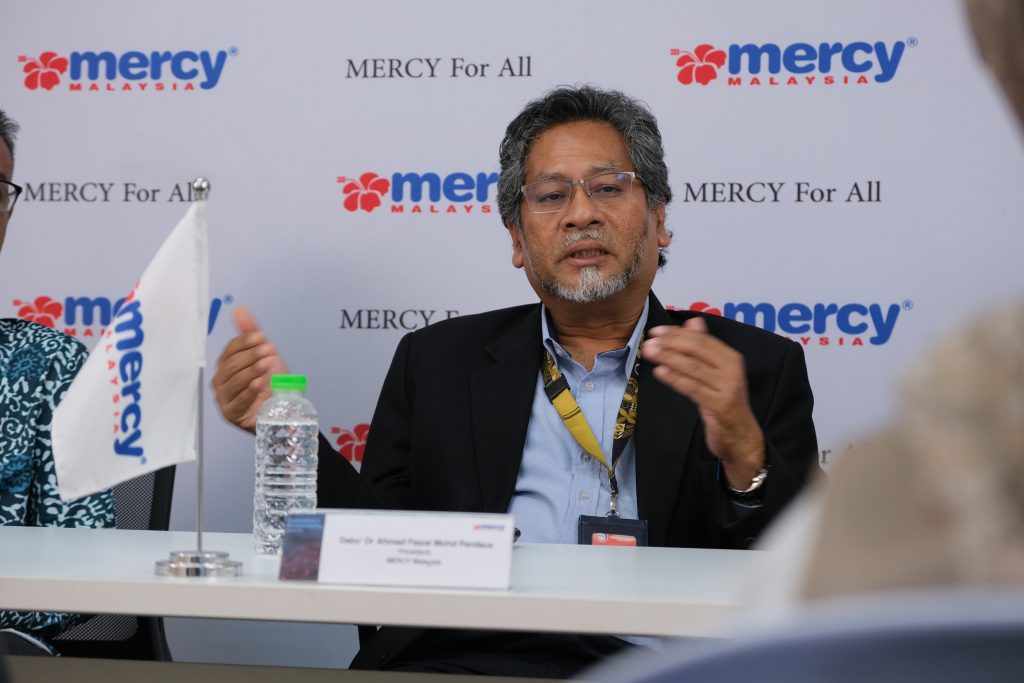
Its president Datuk Dr Ahmad Faizal Mohd Perdaus (picture) said the issue could no longer be treated as isolated, as the debate over NGO transparency has widened and affected public trust in the broader sector.
“We felt we had to do this. It’s our responsibility,” he said at a press conference of Mercy Malaysia’s governance and accountability workshop on May 19.
The workshop, the first in a planned series, brought together NGOs, government agencies, corporate representatives and audit firms to discuss gaps in governance, transparency and accountability within the sector.
Ahmad Faizal said Mercy Malaysia has also been reviewing its own internal processes, including its risk management framework and governance procedures, as part of efforts to strengthen accountability within the organisation.
Meanwhile, Life Care International Medical Group CEO Datuk Dr ‘Aliyah Karen said one of the main weaknesses in Malaysia’s NGO oversight framework is fragmented governance, as civil society groups can register under different bodies and operate under different sets of rules.
“One of the biggest issues is that there are many ways to set up and register an NGO in Malaysia. There are different regulatory bodies looking at slightly different types of organisations,” she said.
She said this has created uneven standards across the sector, including in reporting, fund management and the way organisations account for money raised from the public.
She also noted that the issue has become more pressing as Malaysian NGOs have grown from volunteer-driven groups into professional organisations with full-time staff, wider donor bases and larger financial responsibilities.
Ahmad Faizal said the public has also become more cautious, with Mercy Malaysia seeing more questions from donors following recent debates over NGO accountability.
He said the organisation’s general public funds have recorded a dip, despite Mercy Malaysia not being implicated in any allegations.
However, he said the impact should not be viewed only as a Mercy Malaysia issue, as public scepticism could affect the wider civil society sector, including organisations involved in humanitarian aid, conservation, climate change, animal welfare and policy advocacy.
Ahmad Faizal said accountability must therefore involve NGOs, donors and regulators, as each party has a role in ensuring that funds are raised, managed and used responsibly.
“NGOs for a long time, before we have been taking that part a little bit easily, thinking that because they are not for profit, it’s okay,” he said.
He said donors and the public should ask questions before contributing, while NGOs must be able to show how money is used and what outcomes are achieved.
Ahmad Faizal said Mercy Malaysia hopes future sessions can be carried out with institutional partners and regulatory stakeholders to build wider consensus on governance reforms.
At the same time, he cautioned that concerns over NGO governance should not be used as a reason to restrict civil society space.
“We would like to reiterate to the government that it also should not use this as an excuse to clamp down on civil society or restrict civil society space,” he said.
Ahmad Faizal said Malaysia may need better harmonisation of laws, the closing of loopholes and a suitable platform to strengthen transparency and accountability in the sector.
He said this could include studying models such as the UK’s Royal Charity Commission or developing a different structure suited to Malaysia’s civil society landscape.
The post Mercy Malaysia calls for stronger NGO governance without shrinking civil society space appeared first on The Malaysian Reserve.





 View original content to download multimedia:https://www.prnewswire.com/apac/news-releases/litfincon-asia-2026-convenes-june-3–4-at-the-marina-bay-sands-as-global-litigation-finance-leaders-gather-in-singapore-302775656.html