
Auto Added by WPeMatico

This comes as Chinese automakers rapidly reshape the regional automotive landscape with competitive pricing and fast technological advances
by AZALEA AZUAR
THE race to electrify Malaysia’s automotive industry is accelerating, but the country may not yet be fully prepared for the transition.
Despite growing investments from global electric vehicle (EV) manufacturers and rising consumer interest in electrified vehicles, experts at the 2nd Asean Automotive and Mobility Conference warned that Malaysia still faces major gaps in charging infrastructure, local research and development (R&D) capabilities, and long-term industry readiness.
This comes even as Chinese brands rapidly reshape the regional automotive landscape.
Building Local EV Innovation Capacity
The Investment, Trade and Industry Ministry (MITI) said Malaysia is poised to become a global hub for EV manufacturing.
Global manufacturers such as BYD Auto Co Ltd had expressed confidence in the country by establishing operations at KLK TechPark in Tanjong Malim, Perak, the ministry added.
Despite the optimism, experts warned that Malaysia may still lack sufficient EV engineering and R&D capabilities.
During a panel discussion on technology trends in the automotive industry, Electric Vehicle Association of Malaysia (EVAM) president Datuk Dennis Chuah said this remains one of the key challenges facing the EV sector.
He noted that many graduates were questioning whether there was a long-term career path in the industry.
Chuah stressed that Malaysia and ASEAN must invest more heavily in EV R&D, particularly in battery technology and innovation, instead of relying on foreign players to drive advancements.
There were opportunities for ASEAN to leverage its semiconductor expertise, particularly in Penang, to develop more efficient EV technologies such as compact, high-capacity chargers for electric two-wheelers.
With ASEAN recording around 15 million vehicle registrations annually, alongside India’s 20 million yearly two-wheeler registrations, Chuah believes the region has significant potential to grow its EV ecosystem through local innovation and talent development.
“There are so many opportunities for us to pursue, but we must look beyond merely adopting the technology. We also need to put in our efforts into R&D so that we can develop highly efficient products.
“Electronics make up more than 50% or 60% of the entire vehicle, and this gives us an advantage because Malaysia has been export-oriented in semiconductors for almost 30 to 40 years,” Chuah said.
ASEAN had spent the past decade working with governments and industry players to develop EV policies, technology roadmaps and over-the-air (OTA) regulations to support the sector’s long-term growth.
According to Chuah, regional collaboration in R&D is crucial to ensure local industries can participate in EV innovation rather than relying solely on foreign automakers.
He also highlighted battery technology as a key area for research. Battery energy density has improved from 100Wh/kg a decade ago to 250Wh/kg today, with expectations of reaching 500Wh/kg in the future.
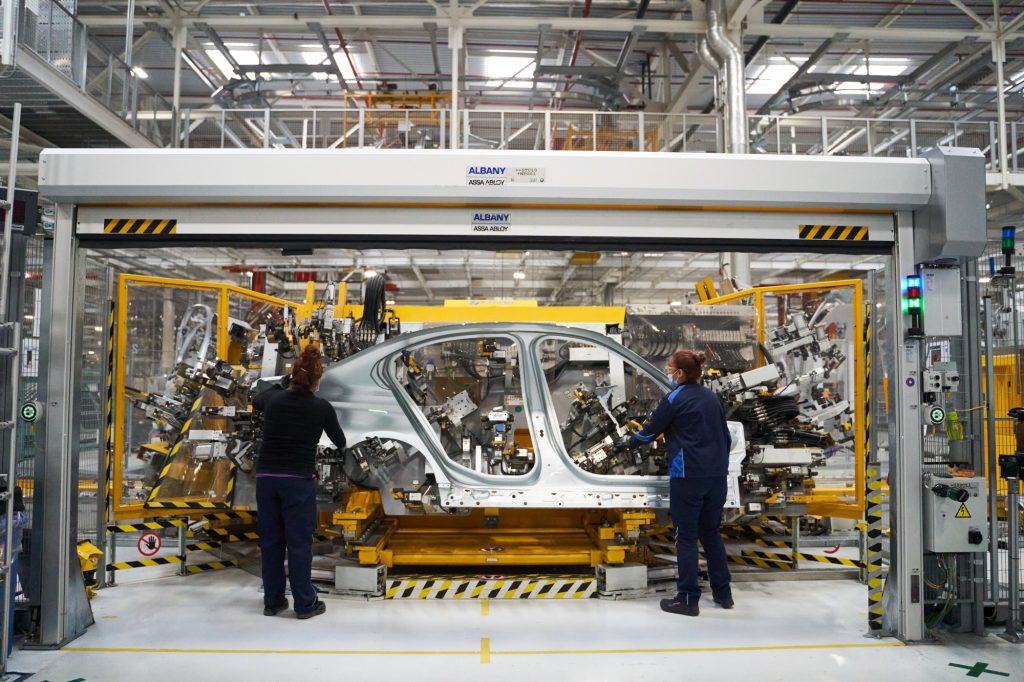
This shift would significantly change EV engineering and manufacturing processes, requiring new approaches beyond traditional welding and assembly methods.
On electric two-wheelers, Chuah said current products are still unable to compete with conventional combustion-engine motorcycles, while dedicated charging solutions for two-wheelers remain underdeveloped.
The Better Option
Despite the push towards EV adoption, experts believe hybrid vehicles are currently better suited to Malaysian consumers.
MCE Holdings Bhd Malaysia Group MD Dr Goh Kar Chun said hybrid vehicles currently play an important role in supporting the transition towards battery EVs (BEVs), especially as Malaysia’s charging infrastructure, affordability and consumer confidence are still developing.
“It allows the whole broader ecosystem, including companies like us and suppliers, to prepare while the industry gradually moves in that direction.
“Our major concern as we look at the EV transition is that we have been working on different business models for the last 20 to 30 years.”
Goh added that the shift to EVs was forcing suppliers to reassess whether their products and capabilities would remain relevant and competitive, as EVs require new load-bearing and electronic systems.
Companies with strong electronics expertise, such as MCE, are better positioned to adapt to the transition, although the industry shift will ultimately create both winners and losers.
Similarly, Proton Holdings Bhd deputy CEO and Auto Nexus Productivity chairman Datuk Abdul Rashid Musa said hybrid vehicles are a more practical solution for Malaysia.
He noted that Malaysians drive about 28,000km annually, compared to 10,000km in China.
“That makes hybrid a more reasonable solution for us compared to BEV. Nevertheless, Malaysia has a uniquely high motorisation rate, with many households owning a second or third car. So I think it is still an advantage for a second or third car to be a BEV,” he said.
Malaysians also tend to travel longer distances during festive seasons, which can exceed the driving range of BEVs.
Abdul Rashid also highlighted the cost difference between home and public EV charging, saying a B-segment EV costs about RM4 per 100km when charged at home, but around RM16 per 100km when using public chargers.
By comparison, subsidised RON95 fuel under the Budi Madani RON95 (Budi95) programme costs about RM10 per 100km, suggesting that public charging costs remain a challenge for wider BEV adoption.
EV Charging Network Still Lags
As of March 2025, there were only 4,161 charging bays nationwide, far below the government’s target of 10,000 units by the end of 2025.
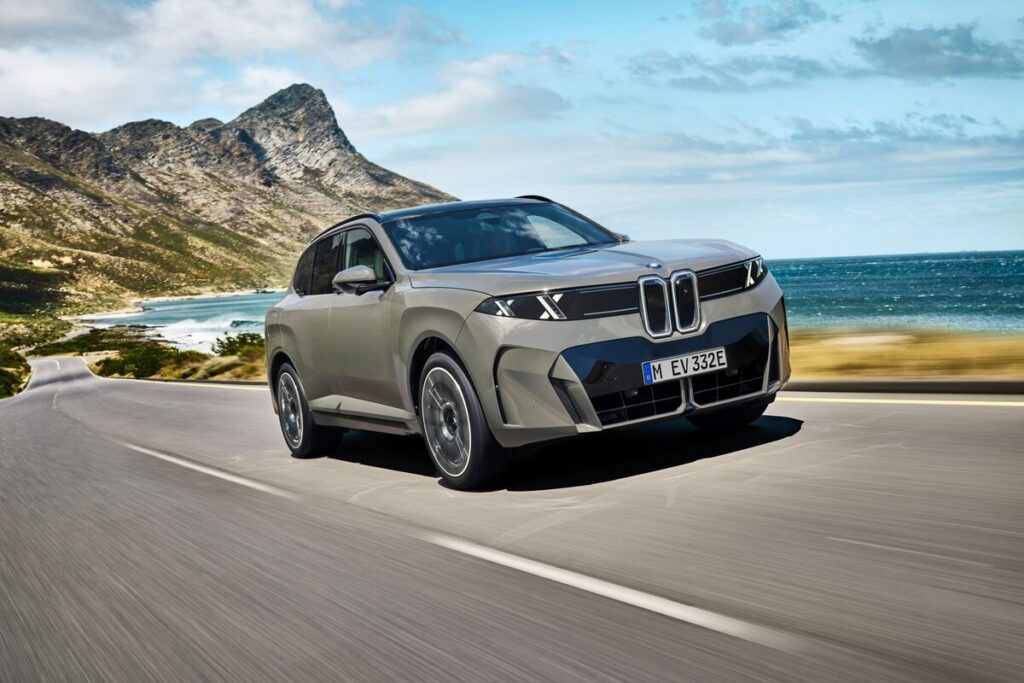
BMW Group Malaysia MD Benjamin Nagel said newer EV models, such as the BMW iX with a range of up to 700km, were helping to address these concerns.
He said BMW Group would continue investing in electrification after introducing its first plug-in hybrid electric vehicle (PHEV) in Malaysia in 2015.
The automotive industry could not rely solely on electrified vehicles, stressing that highly efficient petrol cars would still be needed over the next decade.
He added that BMW Group would maintain a technology-neutral approach by offering a mix of powertrain options to meet different customer needs.
Meanwhile, Carsome Group chief business officer Aaron Kee said one of the biggest barriers to EV adoption was concern over long-term ownership value.
He argued that many automakers focus too heavily on sales while neglecting after-sales support.
Practices such as aggressive discounting, frequent model refreshes and weaker after-sales experiences can hurt consumer confidence and negatively affect resale values, ultimately influencing buying behaviour.
“Brands that tend to offer heavy discounts and refresh their product cycle a bit too fast will eventually lead to poor consumer behaviour, which in turn also may affect the resale market,” he said.
Amid the lack of charging infrastructure and concerns over battery life cycles, Kee expressed optimism about hybrid vehicles and PHEVs.
He said demand is rising as consumers shifted towards more fuel-efficient vehicles following higher fuel costs and subsidy changes.
Buyers are increasingly moving away from larger 2.0-litre and 2.5-litre vehicles in favour of hybrids and PHEVs, although supply remained limited.
Carsome’s main challenge is sourcing enough vehicles at prices acceptable to both buyers and sellers.
“But overall, while EV adoption is great, I think PHEVs and hybrids deserve much more attention to,” added Kee.
China Overtakes Japan in EV shift
In his session titled ASEAN Perspective, PwC ASEAN Automotive Leader Patrick Ziechmann said Japanese brands continued to lose market share in Malaysia, falling from 57% at the end of last year to 54% in the first quarter 2026 (1Q26).
He said established players such as Toyota Motor Corp are beginning to show signs of decline.
At the same time, he observed that Chinese automobile brands are rapidly gaining ground in Malaysia, increasing their market share to 15% in Q1, up six percentage points (pps) year-on-year (YoY) and 4pps higher than at the end of 2025. Ziechmann also spoke about developments in China’s automotive sector following PwC’s visit to Beijing.
“We were able to observe the transformation from software-defined vehicles to artificial intelligence (AI)-driven vehicles, making them autonomous.”
Companies such as BYD and Xiaomi Auto are increasingly positioning themselves as technology firms, while tech giant Huawei Technologies Co Ltd is also entering the automotive space. This reflects how quickly Chinese automakers and technology companies are converging.
Ziechmann said these companies had successfully built a broad portfolio of brands at scale, something even some established global players have struggled to achieve.
Traditional manufacturers such as BMW and Volkswagen are now trying to catch up with China’s rapid advances in automotive technology.
These brands are also facing challenges related to speed, pricing and strong consumer nationalism in the Chinese market.
Ziechmann said Malaysia’s electrified vehicle market, which includes BEVs, hybrids and range-extended vehicles, recorded a sharp increase in Q1, with adoption tripling YoY to 11% and surpassing the 10% threshold for the first time.
In April, Proton posted strong sales performance in 1Q26 and its position as Malaysia’s leading EV brand through its Proton e.MAS line-up.
Proton sold 49,140 vehicles in the first three months of 2026 (3M26), its highest quarterly sales since 2004, despite Malaysia’s overall automotive market shrinking.
This was driven by strong demand for both its traditional internal combustion engine (ICE) vehicles and its expanding EV and PHEV range.
Ziechmann acknowledged Proton’s success with its two Zhejiang Geely Holding Group Co Ltd-based technologies, namely the e.MAS 7 and the e.MAS 5.
“They have very competitive pricing, very good technology and very good reviews in public domains,” he said.
While Malaysia’s EV transition is accelerating, experts say the country must address gaps in charging infrastructure, local R&D and industry readiness to remain competitive.
For now, hybrids and PHEVs are seen as the more practical solution for Malaysian consumers, while Chinese automakers continue to reshape the market with competitive pricing and rapid technological advances.
Industry players say Malaysia’s long-term success will depend on its ability to develop local innovation, talent and supporting infrastructure, rather than relying solely on foreign technology and investment.
- This article first appeared in The Malaysian Reserve weekly print edition
The post Malaysia’s EVs need push for R&D, better infrastructure appeared first on The Malaysian Reserve.