
Auto Added by WPeMatico
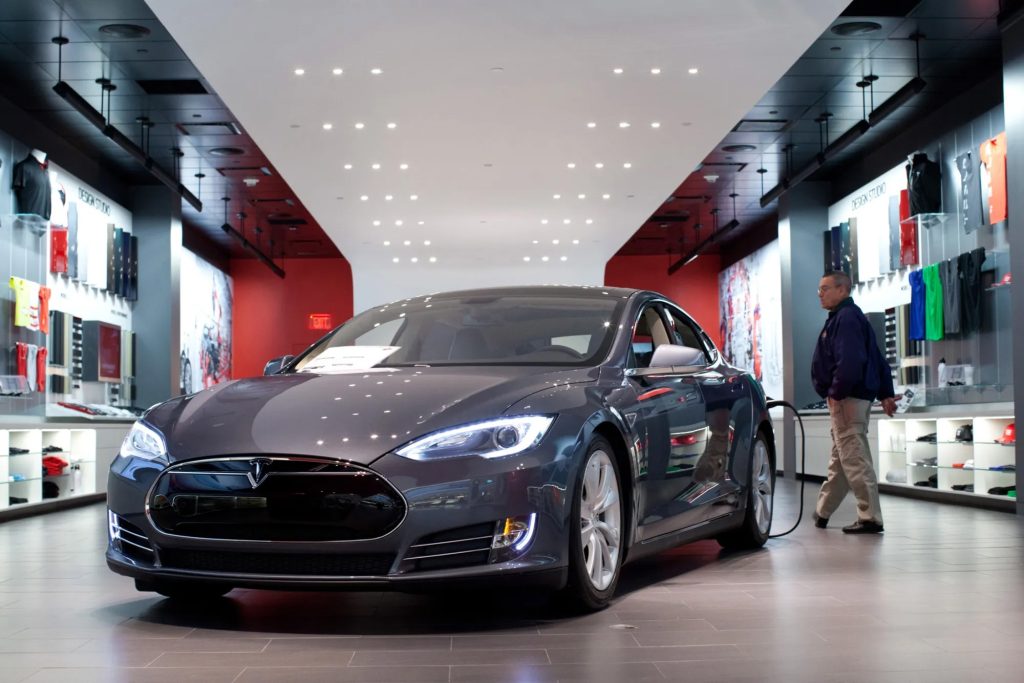

The vehicles that outlasted the Model S are still operating in its shadow
by HANNAH ELLIOTT
THE first time I saw a Tesla Model S was also the first time I met Elon Musk.
It was 2011 and he had brought an early Model S to the West Side Highway in Manhattan, where we met to go for a drive. It didn’t strike me as a crucial meeting. In the course of my work as an automotive reporter, I met with plenty of people shilling new cars, and back then Musk was just the founder of a company that merged with another company that became PayPal Holdings Inc. Only the wonkiest of tech nerds might have recognised him by name.
The sedan he brought that day was the opposite of the big-spoiler sports cars I was used to seeing, like the Porsche 911 GT3. Completely smoothed to maximise air flow, the Model S was simultaneously lowkey and unique.
When I first got inside, it felt weird that there was no sound or vibration to indicate that anything had turned on, but the car felt surprisingly fast as we headed up the highway. So fast, Musk said, that it could beat
an Aston Martin. He claimed it would change the world. I took that with genuine curiosity and a big pinch of salt; no one I knew at the time was asking for a laptop on wheels.
Fifteen years later, Tesla Inc has sold hundreds of thousands of that smooth sedan I first saw in New York. (The company doesn’t break out sales numbers between the Model S and X, but their cumulative sales total is higher than 630,000. A spokesperson didn’t respond to a request for comment.) By 2023, the Model S had helped make Tesla the only automaker in the “Magnificent 7,” a term coined to describe seven stocks leading gains in the S&P 500 index: Alphabet Inc, Amazon. com Inc, Apple Inc, Meta Platforms Inc, Microsoft Corp, Nvidia Corp — and Tesla.
Things have shifted since those heady days. Its first-mover advantage long gone, the Model S has grown outdated among the wide range of electric vehicles (EVs) now available in the US. These cars every other automaker had developed to keep up with Tesla. Today Tesla is the only member of the Magnificent 7 whose reported earnings have declined since 2023 and Musk said Tesla will now emphasise robots rather than passenger vehicles, sales of which have suffered because of a stagnant product lineup and the loss of federal incentives.
On Jan 28, he announced Tesla will discontinue the Model S (and X).
But that doesn’t diminish the impact of this revolutionary vehicle. Love it or hate it, the success of the Tesla Model S forced every legacy automaker to jump into the race that Musk created — to fill the world with EVs. It changed everything else along the way — and will continue to drive what comes next.
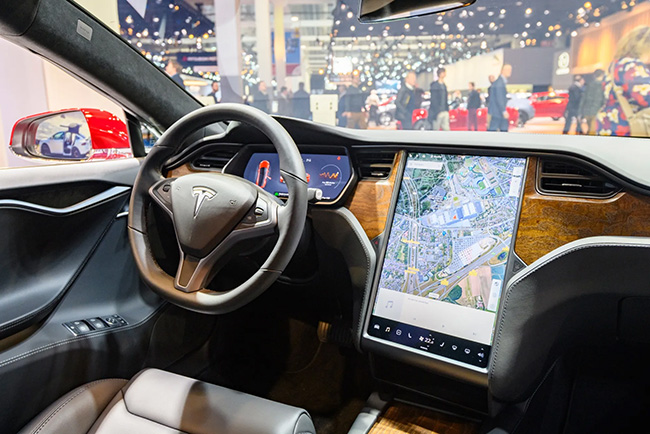
The Model S offered over-the-air updates that kept its infotainment capabilities feeling practical and current
First Among Peers
The Model S wasn’t the first car Tesla developed. (That was the two-door Roadster built on a Lotus chassis, which arrived in 2008 and sold fewer than 2,500 units.) But it was the first car that Tesla created from scratch and the one that catapulted the company to become the most valuable automaker in the world by 2020.
I racked my brain for some other vehicle from this century making as much of an impact. In 2013, Porsche’s 918 Spyder and Ferrari’s LaFerrari, each a symphony of engineering and design, proved that hybrid electric technology could provide superior driving performance, not just better efficiency. BMW’s athletic i8 hybrid arrived that year, too. Along with the diminutive i3, it proved that a legacy automaker could wrap electric power in ingenious designs that were well-suited for consumers worldwide. But none of those reached the production numbers or status of Tesla’s star.
Nissan’s Leaf could qualify as car of the century. The world’s first series production battery EV, the Leaf launched in 2010 and outpaces the Model S with more than 650,000 sold worldwide. It was great for its affordability, convenience and fuel savings. But the Leaf lacks the cultural and ideological heft of the Model S, the flagship of a pure-play EV brand that spawned 75,000 Superchargers, a rabid following and a host of imitators.
“Without the Model S, we wouldn’t be where we are today,” said Stephanie Valdez Streaty, director of industry insights at Cox Automotive Inc. “It was the performance, the range and the design. It created like this awareness of EVs that was something totally different than what we got with the Leaf.”
Another contender: The Porsche Cayenne. It belonged to the first wave of premium SUVs, now the most profitable segment in the industry. The Cayenne generated a tonne of cash that allowed Porsche to attempt a historic (failed) takeover of Volkswagen and it proved that Porsche could make SUVs without losing its core sports car customers.
But the Cayenne’s impact was limited primarily to Porsche. Even then, the soccer mom rig did not become the bedrock of a brand’s cultlike status the way the Model S did: Favoured by millions who cheered the CEO online. At Porsche, that’s the 911’s job.
Others have suggested that a car from BYD Co Ltd might qualify as most important. After all, the Chinese automaker beat Tesla as the world’s biggest seller of EVs in 2025. But it’s too early to hand the crown to a Seal or Qin L just yet. They aren’t sold in the US, the world’s biggest auto market by revenue. Even though many analysts said it’s only a matter of time before BYD sells here, the US still deters Chinese companies with steep tariffs and bans software systems developed or controlled by them. Check back in a few years.
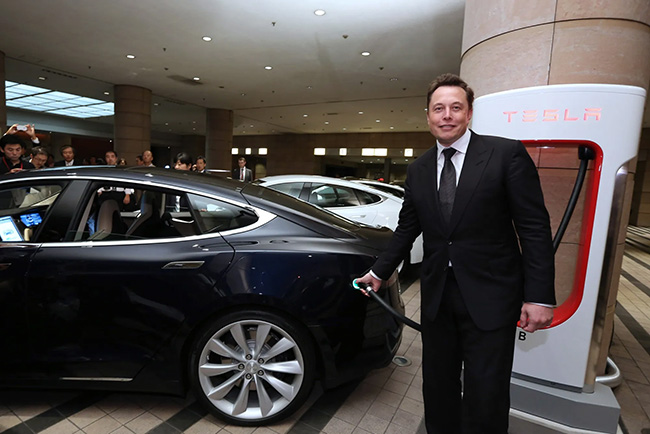
Musk with a Model S in Tokyo in 2014
A Mule For Disruption
The Model S surprised people from the start. When I first slid into the passenger seat and gazed up at Manhattan’s skyscrapers through its panoramic glass roof, my overwhelming impression from the inside was that here was something unlike anything we’d seen before.
It took me years to fully grasp how disruptive it was. Even Musk himself was still driving the sporty Roadster as his daily. I rode in it with him soon after the Model S drive as part of further reporting in Los Angeles. He likened driving these EVs to sailing, marvelling at how you could enjoy the sounds of nature without the roar of a combustion engine.
“We need to figure out how to have the things we love and not destroy the world,” he told me.
When the Model S arrived, people went gaga for the minimalist cabin, its front trunk, or frunk and flush-mounted automatic door handles (currently undergoing a redesign because of safety concerns). The large vertical touchscreen mounted inside was what made the car feel the most futuristic.
Unlike the quirky Leaf, the Model S felt like a proper automobile for adults, and it had the range 260 miles (418.4km) and charging capacity to back it up. It was undoubtedly the most progressive EV, with the biggest potential for mass appeal, anyone had ever seen. But the Model S also forced changes in the car industry that had nothing to do with its being electric. It was the reason Tesla became the first all-new mainstream automaker to enter and survive in the US market since Hyundai Motor Co did in the 1980s.
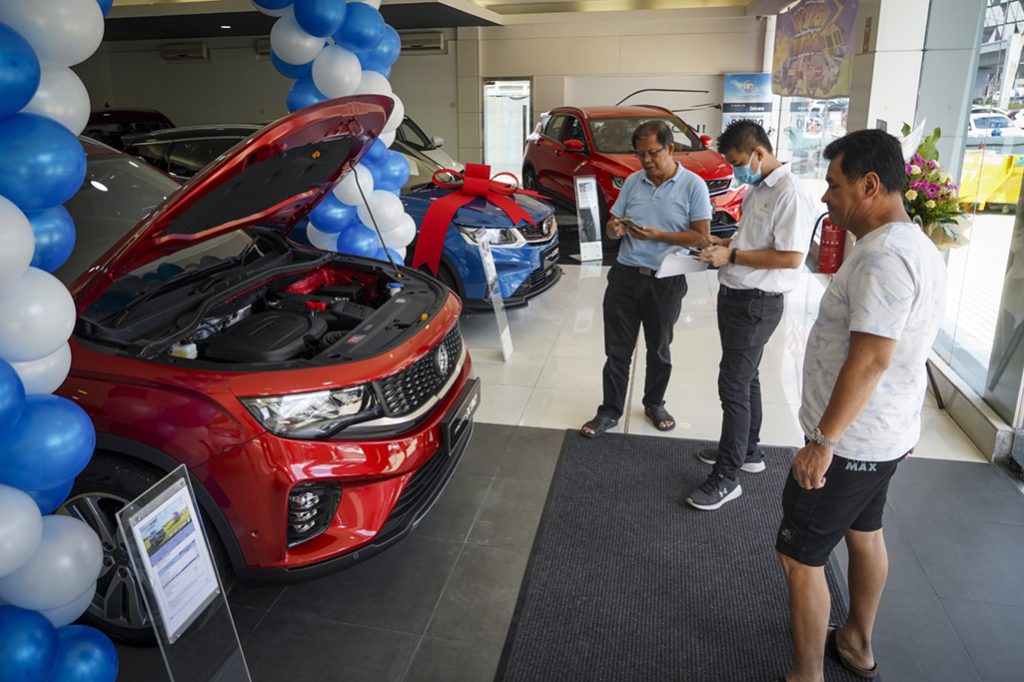
The Model S busted the myth that people wouldn’t buy a new car online. Musk wanted to show the model in proprietary retail shops, not franchised dealerships. So he went to court against the franchise laws and dealer associations that stipulated vehicles must be sold in traditional showrooms. He won and the Model S became the first car you inspect in a
mall and then buy with the click of a button. It was also the first mainstream vehicle to offer comprehensive, over-the-air software updates to improve technology and fix bugs, which simultaneously kept it feeling cutting-edge and reduced the need for maintenance. Now legacy automakers like Mercedes-Benz Group AG and Porsche offer a host of similar software upgrades and Lucid Group Inc, Afeela and Rivian Automotive Inc all copy the direct-to-consumer method Tesla pioneered with the Model S as the vanguard. Then there’s Autopilot, which Tesla put in the Model S in 2016. Its advanced driver-assistance systems, like traffic-aware cruise control, were the precursors to the company’s current Full Self-Driving (Supervised) system that allows Level 2 self-driving.
“Nothing has transformed the reputation of the Model S as much as Tesla’s pursuit of self-driving,” Keith Barry wrote in a consumer reports analysis of the car a decade after its launch. “The car’s story is now forever entwined with Musk’s promises about vehicle autonomy.”
Many Tesla acolytes today said that what they want most in a new car is real self-driving. Musk has been promising that since at least 2013 and analysts like Anthony Salerno, senior VP of automotive analytics at JD Power, told me they still believe he’ll eventually deliver.
In the meantime, the autonomous Tesla Cybercab, which you can hail via smartphone, is expected later this year. Call it the latest indicator that Tesla is shifting further away from making consumer cars altogether. It’s almost like EVs were just technology mules — a means to an end toward Musk’s more far-fetched goals. Tesla is converting factory space where the Model S and Model X were made in Fremont, California, into a manufacturing hub for the Optimus robot.
“I can see the day where Tesla has morphed into this other thing that is not a passenger vehicle company anymore,” said Kevin Tynan, director of research for the Presidio Group. “So that the only thing that’s left ultimately would be a robotaxi.”
Musk announced earlier this month that he will combine SpaceX and xAI as he works to generate cash to fund future dreams while simultaneously deemphasising the very things that bring in the cash: Cars.
But even when Tesla’s passenger cars disappear altogether, the legacy of the Model S will continue. The sleek sedan that catapulted EVs into our consciousness was more than cutting-edge. It was the key that unlocked a whole new world. — Bloomberg
- This article first appeared in The Malaysian Reserve weekly print edition
The post Tesla cancelled the car of the century appeared first on The Malaysian Reserve.