Auto Added by WPeMatico

Macroeconomic conditions remain supportive of continued monetary policy normalisation
by IFAST RESEARCH TEAM
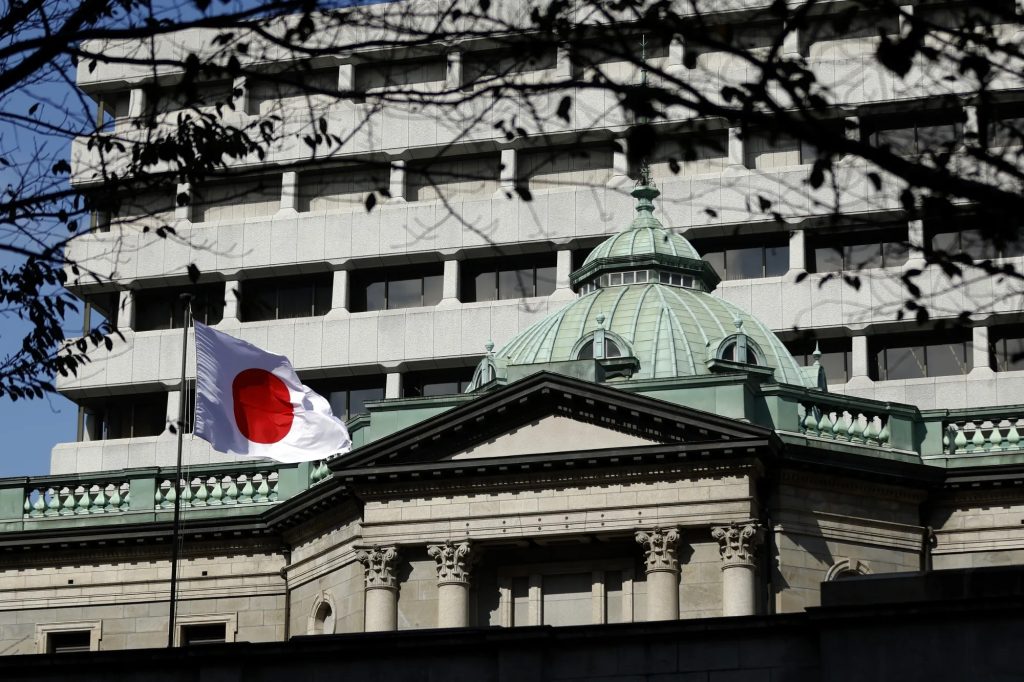
THE Bank of Japan’s (BOJ) rate hike cycle is underpinned by a reflating environment. Japan’s core Consumer Price Index (CPI), the BOJ’s preferred measure of inflation, has remained above the 2% target since April 2022.
Domestic consumption has provided some support to inflation, as reflected by core CPI remaining above 2% since September 2024.
However, the recovery remains modest, with real consumption still lagging significantly behind nominal spending.
Addressing cost pressures while lifting real consumption remains a key policy priority for Prime Minister (PM) Sanae Takaichi. The recently approved ¥21.3 trillion (RM552 billion) stimulus package, including cash handouts, rice vouchers and electricity bill subsidies, is well-positioned to support higher household spending.
Another key indicator that Japan is moving toward sustainable inflation is improving wage dynamics. While real cash earnings remain in negative territory, the pace of decline has narrowed in the first half of 2025 (1H25).
More importantly, wage growth is expected to persist, as Rengo, Japan’s largest labour union, is once again pushing for wage increases of 5% or more in 2026.
With ongoing wage growth, alongside consumption-supportive subsidies and government efforts to curb food inflation, Japan is likely to see positive real wage growth and stronger wage-driven consumption in 2026.
Japan’s economic growth has also been holding up well. In its latest quarterly Outlook for Economic Activity and Prices, the BOJ upwardly revised real GDP growth for 2025 from 0.6% to 0.7%, driven by stronger business investment and a rebound in exports.
Looking ahead, the BOJ projects modest 0.7% year-on-year (YoY) GDP growth for 2026, reflecting caution amid slowing global demand.
However, reduced US tariff rates to 15% under recent trade deals and renewed stimulus measures Takaichi, aimed at supporting household consumption, could help mitigate downside risks to growth.
Japan’s macroeconomic environment points to a continued refla- tionary trend, supporting further monetary tightening. That said, the pace of rate hikes is likely to remain measured in 2026, as both real consumption and real wage growth still have room to improve.
Corporate Reforms are Fuelling Japanese Equities’ Appeal
Corporate reforms have been a key contributor to equity market growth. Since the Tokyo Stock Exchange (TSE) introduced measures to address low price-to-book (P/B) ratios in March 2023, companies have accelerated efforts to improve capital efficiency, earnings and shareholder returns.
As of Dec 22, 2025, the share of Nikkei 225 companies with P/B above one has risen from 45% in 2022 to 75%, with a weighted average P/B of 2.2 times.
Return on equity (ROE), a key measure of how efficiently companies generate profit from investments, has also improved to 10.8% as of Dec 22, 2025, up from a pre-2023 average of 8.9%.
While progress is evident, Japanese companies still lag other developed markets, with the S&P 500 and STOXX Europe 600 posting higher ROEs of 18.8% and 12.2% respectively.
Government initiatives continue to fuel reform and long-term improvements. In 2025, the Financial Services Agency revised the Stewardship Code to promote greater shareholder engagement through enhanced investor- company dialogue.
The TSE also tightened listing criteria for the “Growth Market,” requiring companies listed for five or more years to meet a ¥10 billion market capitalisation threshold by March 1, 2030. Firms failing to meet the target must present growth strategies to the TSE or face potential delisting.
Delistings are already on the rise, reflecting TSE’s focus on listing quality over quantity. In 2025, 124 companies were delisted, up from 94 in 2024.
Rising costs of public listing and activist shareholder pressure are also driving management-led takeovers, particularly among smaller-cap companies that are often overlooked by global funds.
With TSE’s transitional relief now ended, 2026 is expected to see further delistings. Importantly, this should be viewed as a positive rather than a concern.
As weaker or less committed list- ings exit the market, the reforms incentivise the remaining companies to improve earnings quality, enhance liquidity and raise their visibility in order to meet stricter listing standards. This, in turn, encourages better capital allocation and more shareholder-friendly behaviour.
Stimulus, Reflation to Drive Robust Earnings Growth
Japanese companies delivered a strong rebound in the second quarter of 2026 (2Q26), as tariff- related price distortions and export concerns eased.
All sectors except energy and real estate posted positive earnings surprises. The top ten Nikkei 225 holdings collectively achieved an impressive 72% YoY earnings growth, with Advantest Corp and SoftBank Group Corp benefiting most from artificial intelligence (AI) investments and the rapid expansion of high-performance computing.
Looking ahead, sectors such as communication services and information technology are set to gain from Takaichi’s technological nationalism agenda.
Japan’s efforts to revive domestic semiconductor manufacturing, including its ambition to produce two newton metre (Nm) chips, are expected to continue supporting Rapidus Corp, including SoftBank and Nippon Telegraph and Telephone Corp and other players in the semiconductor supply chain such as Tokyo Electron Ltd and Advantest.
Government initiatives to build a domestic cloud ecosystem and data management platforms should also benefit cloud service providers, telecoms and cybersecurity software firms.
Strong wage growth, combined with new stimulus packages should contain price pressures and boost consumption.
Consumer staples are likely to be major beneficiaries, with brands such as Sapporo Holdings Ltd and Japan Tobacco Inc recently upgrading full-year earnings forecasts on stronger domestic sales.
Consumer discretionary, by contrast, may see more modest growth, as automakers, still heavily reliant on the US market, absorb higher costs to maintain market share, which squeezes profit margins.
The ongoing rate-hiking environment is also expected to support the financial sector, allowing banks to capture wider interest margins.
Japan’s largest banks are already raising annual profit forecasts and expanding share buyback programmes after strong Q2 results.
Japan’s three largest banks have all upgraded their financial year
2026 (FY26) earnings guidance. Mitsubishi UFJ Financial Group Inc and Sumitomo Mitsui Financial Group Inc have raised their earnings targets by around 5% and 15%, respectively, while Mizuho Financial Group Inc has upgraded its earnings forecast twice during the current financial year, resulting in a target that is now approx- imately 11% higher than its initial projection.
Yen is Expected to Find Modest Support in 2026
The Japanese yen continued to weaken despite a 25 basis points (bps) rate hike in December last year, as yen/US dollar movements diverged from narrowing rate differentials.
The pressure likely stemmed from a widely expected rate hike size, BOJ governor Kazuo Ueda’s cautious post-meeting commentary and fiscal concerns tied to large budget outlays under the new PM.
Looking ahead to 2026, the yen is expected to find modest support. Persistent inflation and further BOJ tightening, coupled with stimulus measures boosting consumption, could strengthen the currency.
A potential US rate cut would also narrow the interest rate spread, benefiting the yen. Finance Minister Satsuki Katayama has noted Japan has sufficient capacity to intervene in the currency market if excessive weakening occurs. Overall, yen is likely to maintain a slight upward bias in 2026.
Japan’s Appealing Valuations Boosts Its Investment Case
While Japan-China tensions are unlikely to be resolved soon, Japan is expected to mitigate economic losses from tourism through stimulus measures and ensure supply chain stability via its “China+1” strategy.
In the near term, volatility and price pressure may persist, but tensions are likely to be contained, as both countries have limited incentives to escalate further.
- The views expressed are of the research team and do not necessarily reflect the stand of the newspaper’s owners and editorial board.
- This article first appeared in The Malaysian Reserve weekly print edition
The post Structural reform steadies Japan appeared first on The Malaysian Reserve.