
Auto Added by WPeMatico

AI is set to transform the financial planning industry, but human judgment, trust, accountability will remain irreplaceable
by SHAUQI WAHAB
EXPERTS are urging financial planning professionals to rethink wealth management beyond returns and legal structures, with industry leaders warning that artificial intelligence (AI) disruption, behavioural biases and evolving family dynamics are reshaping the future of financial advisory services.
At the Financial Planning Association of Malaysia (FPAM) Annual Signature Financial Planning Symposium 2026 recently, experts stressed that trust, human judgement, succession planning and behavioural understanding will remain critical despite growing digitalisation and technological change.
Compassion in Estate, Succession Planning
Inheritance and succession planning must go beyond legal documents and financial structures to address the human realities that often shape family disputes.
Wong Lu Peen & Tunku Alina’s inheritance and succession lawyer Farah Deba Sofian said estate planning is not merely about distributing wealth after death, but also about preserving relationships, family values and long-term harmony across generations.
Farah Deba said the growing complexity of modern families, cross-border marriages and differing legal systems have made succession planning increasingly challenging.
While financial planners and lawyers can build sophisticated structures such as trusts, family offices, foundations and family constitutions, the biggest challenge remains the human factor behind wealth ownership and inheritance.
“Structure is a form and human factor is really the substance,” Farah said in the ‘Challenges in Planning for the Future Generations: The Unknown Factor in Private Wealth’ session at the symposium.
Estate planning ultimately involves balancing legal rights with compassion, empathy and family dynamics.
Farah Deba warned that family disputes can drag on for years despite clear legal frameworks, citing one inheritance case that began in 2014 and remains unresolved in court due to suspicion and conflict among family members.

Farah Deba urges advisors and financial planners to encourage clients to look beyond rigid legal entitlements and instead focus on maintaining family bonds and compassion
Delays in estate distribution are often worsened by changing family needs, remarriages, blended families and disputes over fairness.
The complications arising from mixed marriages, cross-border unions and differing applications of Islamic and civil law across jurisdictions.
Marriages recognised in one country may face procedural issues in another, while unregistered marriages can create legal uncertainty during inheritance claims, divorce proceedings or child custody disputes.
Several real-life cases to illustrate how succession conflicts are often deeply emotional rather than purely financial.
In one case, a non-Muslim grandmother who cared for her ill Muslim son decided to donate his organs after his death without consulting his estranged grandson, who was legally entitled to inherit the estate.
Through mediation and family discussions, the son later relinquished his inheritance rights after reflecting on his absence during his father’s illness.
“If you talk about fighting about rights, there is no end to it. Money is king, but there are values that come with the money.”
Farah Deba urged advisors and financial planners to encourage clients to look beyond rigid legal entitlements and instead focus on maintaining family bonds and compassion.
Islamic principles, family values and local laws must often be balanced carefully, especially in multicultural and multi-jurisdictional settings.
The realities of evolving family structures, including adopted children, blended families, single parents and same-sex relationships, saying succession planning must adapt to modern social realities even as traditional legal systems continue to evolve.
On family businesses and multi-generational wealth, she said succession planning requires balancing the interests of family, ownership and business operations, all of which may evolve differently across generations.
Governance tools such as family charters and constitutions are useful, but their effectiveness ultimately depends on how values are passed down within the family.
“Family charter is not binding, it’s family values. It is how you teach your children the value of money and how you teach them to respect someone you disagree with.”
Farah Deba cautioned against blindly pursuing high-return investment structures without understanding the regulatory and fiduciary implications.
Advisors must always act in the best interests of clients and ensure wealth planning strategies remain legally and ethically sound.
AI Will Redefine Financial Planners, Not Replace Them
AI is set to transform the financial planning industry, but human judgment, trust and accountability will remain irreplaceable.
FPAM president Anil Singh Gill said Malaysia’s financial sector is rapidly embracing AI-driven tools as regulators and industry players push for greater digital adoption and financial inclusion.
The Securities Commission Malaysia (SC) has already incorporated AI and digitalisation priorities into its Capital Market Masterplan.
AI has evolved beyond large language models such as ChatGPT into “agentic AI”, where systems are capable not only of generating recommendations but also executing tasks autonomously.
These tools can greatly improve efficiency for financial planners by analysing customer data, automating workflows and generating personalised recommendations at scale.
However, Anil warned that AI systems are still vulnerable to errors, misinformation and algorithmic bias, making human oversight essential in financial decision-making.
“AI does hallucinate. If you use any programme today whether it’s Gemini or Chatgpt, you will see at the bottom results may vary and you cannot trust all the output of the model.
“This means that it can actually give the wrong recommendation, ingesting the wrong data or even the right data, and the output can still be wrong,” he explained during the ‘Financial Planning in the Age of AI: Navigating Risks while Protecting the Client-Planner Relationship’ session.
Financial planners cannot rely entirely on AI-generated advice, especially in areas involving legal liability, suitability assessments, and fiduciary responsibility.
Instead, advisors must verify recommendations, maintain audit trails and ensure that every decision remains explainable to clients and regulators.
Growing concerns over data privacy and cybersecurity, particularly under Malaysia’s
Personal Data Protection Act (PDPA). Financial institutions and advisors must ensure customer data remains protected from breaches, scams and misuse as AI systems become increasingly integrated into financial services.
Beyond technical compliance, Anil argued that the future success of financial planners will depend on their ability to combine AI literacy with emotional intelligence and client trust.
“AI provides telemetry. It provides a path, but customers are paying you to hold the controls, read the room and land the plane safely,” he said.
Throughout the session, he encouraged financial professionals to build new competencies such as data literacy, systems thinking, and AI fluency.
Anil urged planners to actively experiment with AI tools like ChatGPT and Gemini to better understand both their strengths and limitations.
Growing concerns that AI could eventually replace human advisors, comparing today’s AI revolution to the introduction of Microsoft Excel in the 1980s.
Rather than eliminating jobs, technology would likely enhance productivity and reshape professional roles.
While AI can process vast amounts of information faster than humans, financial planning ultimately remains a people-centric profession built on trust, accountability and human understanding.
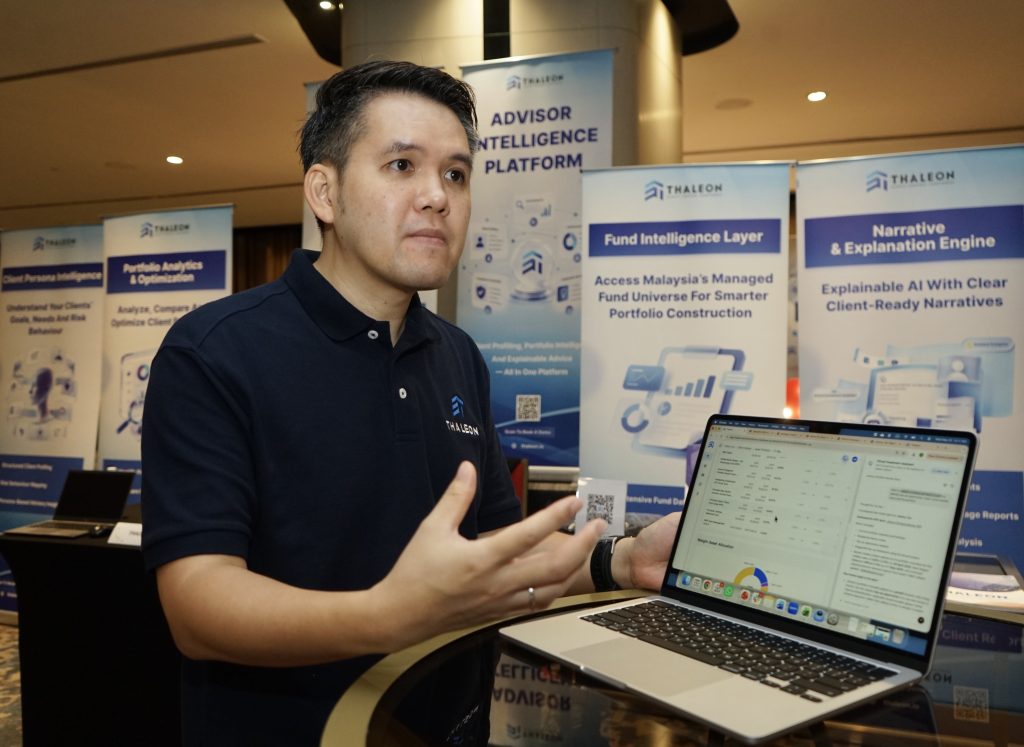
Ng says AI can summarise all the data for you, but it is the experience of the advisors that will make the final judgment
Human Behaviour Takes Centre Stage in Financial Planning
Financial planning is no longer just about numbers, products or investment knowledge, but increasingly about understanding human behaviour, emotions and decision-making patterns.
Institute for Capital Market Research Malaysia (ICMR) senior research analyst Nadhirah Ibrahim said many Malaysians are already aware of the importance of saving, investing early and budgeting, yet often fail to follow through because financial decisions are heavily influenced by emotions, social pressures and behavioural biases rather than a lack of information.
She acknowledged that people are easily swayed by trends, lifestyle spending and social media influences despite knowing better financial habits.
“The challenge is really not information, but behaviour,” she said during the ‘The Psychology of Money: What Really Drives Financial Decisions?’ session.
Behavioural science could help financial planners guide clients more effectively through small but meaningful interventions, or nudges, such as automating savings, setting reminders and simplifying financial goals into smaller, more achievable targets.
Instead of overwhelming clients with abstract long-term goals like retirement or six months of emergency savings, advisors should make financial planning more relatable and emotionally attainable.
Good financial planning is no longer just about providing the right advice, but about helping clients adopt the right behaviours.
Advisors should move beyond simply telling clients to invest, save or diversify and instead help them build systems and habits that make positive financial actions easier to sustain.
“Good financial planning is not only about giving the right advice, but about helping make the right behavior easier.”
The growing role of AI in financial planning, describing it as a powerful but potentially risky tool.
While AI can speed up research, data analysis and administrative work, she cautioned that technology alone cannot fully understand human emotions such as shame, fear, regret and cultural influences that often shape financial decisions.
She warned that excessive reliance on AI could reinforce overconfidence and unhealthy financial behaviour, particularly as AI systems increasingly personalise responses based on users’ emotions and preferences.
This strengthens the role of human financial advisors rather than replacing them.
“Humans are not spreadsheets. In the past, financial advisors were valued for what they knew. But in the future, you will be valued for how well you understand people,” she advised.
Nadhirah emphasised that financial advisors must become more behaviour-aware and relationship-driven, especially when engaging younger investors who increasingly prioritise authenticity, transparency and emotional connection over hard-selling tactics.
Trust, empathy and accountability would become even more valuable in the AI era, where clients are searching not only for financial expertise, but also for genuine human guidance.
The future financial advisor would evolve into a “behaviourist with a financial license”, combining technical expertise with emotional understanding to help clients make better long-term financial decisions.

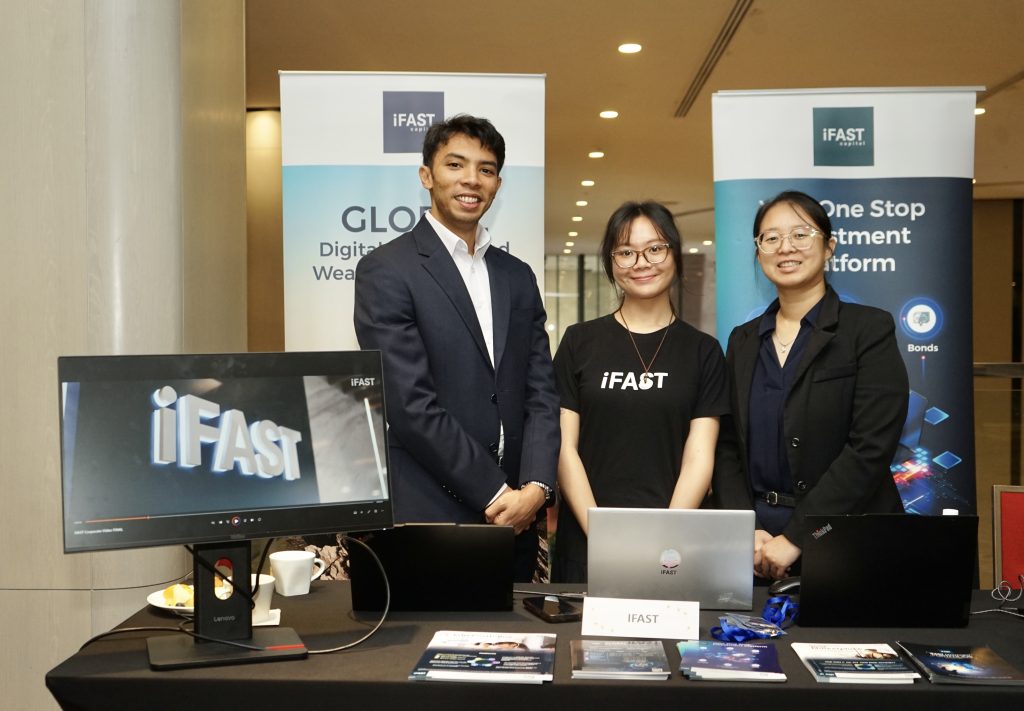
One of the exhibitors at FPAM Annual Signature Financial Planning Symposium 2026
Financial Planners Urged to Focus on Trust, Resilience, Human Connection
Financial planning professionals must move beyond chasing investment returns and instead focus on resilience, trust-building and emotional guidance as clients face growing uncertainty in today’s economic landscape.
A panel discussion highlighted how geopolitical tensions, inflation, social media influence and policy uncertainty are reshaping client behaviour and the advisory profession itself.
Kenanga Investment Bhd CEO Datuk Ismitz Matthew De Alwis said the biggest challenge today is keeping clients committed to long-term financial plans during volatile periods.
“A plan is no longer just about returns, it’s about resilience, sustainability and legacy,” he said, stressing that planners must now act not only as advisors but also as emotional anchors for clients navigating uncertainty.
Meanwhile, Whitman Independent Advisors Sdn Bhd VP of client advisory Teh Jiansheng warned that social media and unverified online advice have increased misinformation and scams, making professional guidance more important than ever.
“We will only take clients on board if they are ready to make a change,” he said.
As for IPP Wealth Managers Ltd investment strategy director Sedek Jantan, policy uncertainty, particularly surrounding global economic shifts and changing US trade strategies, is creating panic among investors and pressure on advisors.
Once a financial plan is in place, the focus should no longer be solely on investment returns.
Instead, the plan should align with the client’s personal life and circumstances, allowing any challenges that arise along the way to be addressed more effectively.
“The problem today is not market volatility, but the misread of structural change,” he said.
Additionally, Buffalo Investment Agency founder Terence Ng said investors are increasingly overwhelmed by excessive information and fear-driven narratives online, causing hesitation in making financial decisions.
The challenge is to convince the client to continue on the execution, as constant influx of new information makes them second-guess their plans.
“Try not to interpret the headline, but provide what is the possible risk and what is the possible opportunity and give the client the right to choose whether they want to stay invested or not,” he advised.
The panel also agreed that while AI and technology can enhance analysis and efficiency, human advisors remain essential in providing trust, personalised guidance and long-term support throughout a client’s financial journey.

Securities Commission Malaysia Market Development director Shahrul Amry Abdul Malek at the event
iFAST Capital Expands Fintech Ecosystem With New Payment, Bond Solutions
iFAST Capital Sdn Bhd is strengthening its role as a fintech-driven investment and advisory platform by offering integrated financial solutions for both advisors and retail investors.
Its investment counsellor Bushan Radhiburman said the company operates through both B2B and B2C channels, with advisors using its platform to access investment products while retail users utilise the FSMOne platform.
The platform provides access to unit trusts, stocks, exchange-traded funds (ETFs) across six global markets, bonds, insurance products and managed portfolios through a single ecosystem.
“On our platform alone, you can actually have access to most of the unit trust in Malaysia, stocks and ETF in six different markets, bonds, insurance and also our own managed portfolios,” he told The Malaysian Reserve (TMR).
iFAST’s fintech capabilities extend beyond investment access, citing its involvement in backend infrastructure such as the Employees Provident Fund (EPF) i-Invest system and investment features integrated into Shopee Money.
Bushan said the company’s research-driven approach helps advisors remain product-neutral while delivering fiduciary-based advice to clients.
Among its upcoming developments is iFAST Pay, which will allow users to invest, save and spend within a single ecosystem through a payment card feature currently undergoing final testing before launch.
“It will be something similar to Touch ‘n Go, where clients can invest, save and also spend within the same ecosystem,” he explained.
Bond Supermart, describing it as Malaysia’s only bond exchange platform that enables retail investors to buy and sell bonds or sukuk directly online with minimum investments as low as RM1,000 for government bonds.
The platform improves transparency and accessibility by replacing traditional over-the-counter processes with a fully digital marketplace.
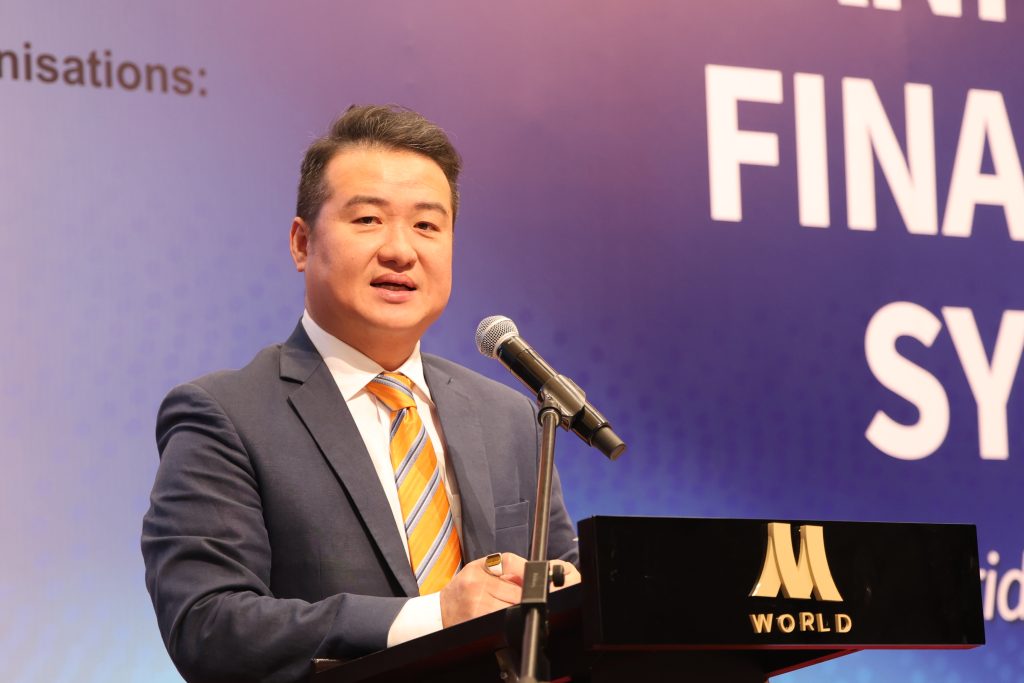
FPAM president Alvin Tan at the FPAM Annual Signature Financial Planning Symposium 2026
Thaleon AI Eyes Regional Expansion as Demand Grows for Smarter Financial Advisory Tools
Thaleon AI is looking to transform the financial planning industry through AI by helping advisors deliver faster, more personalised and data-driven investment recommendations.
Chief strategy and operations officer Ject Ng said the company, established in 2025 through a strategic partnership with Morningstar Inc., was created to address productivity challenges faced by financial planners who must process vast amounts of client, market and product data continuously.
“AI is very good at going through data. As a human advisor, you may only understand 50 investment products, but AI in our system can understand more than 3,000 funds at the same time,” he told TMR.
Thaleon AI’s platform combines market research, client profiling, company policies and advisor preferences into a single system to help advisors build more suitable investment portfolios efficiently.
The technology allows financial planners to focus more on relationship-building and personalised advice instead of spending excessive time analysing information manually.
Despite the growing use of AI, he stressed that human advisors remain essential in the financial planning process because trust, communication and experience cannot be fully replaced by technology.
“The AI can summarise all the data for you, but it is the experience of the advisors that will make the final judgment.”
Ng noted that many financial planners struggle to personalise recommendations due to time constraints and human limitations, often relying on generic approaches instead of tailoring solutions to individual client needs and circumstances.
Thaleon AI aims to help advisors save time on technical tasks so they can focus on building stronger client relationships and trust.
Personalisation as a critical factor in modern financial planning, comparing it to recommendation algorithms used by streaming platforms such as Netflix.
Thaleon AI also plans to expand beyond Malaysia as part of its long-term growth strategy while continuing to strengthen partnerships with asset management firms and financial institutions.
Investors should avoid chasing returns blindly and instead focus on suitability when building investment portfolios.
“The best investment portfolio for anyone is the one that is suitable for you,” Ng said.
- This article first appeared in The Malaysian Reserve weekly print edition
The post Financial planners redefine roles in AI era appeared first on The Malaysian Reserve.