



The move is a critical step in strengthening digital safety framework, particularly as Malaysia continues to expand its connectivity and digital infrastructure
by ANN ZAINUDDIN
GOOGLE is intensifying its push to combat online scams in Malaysia with the rollout of enhanced fraud protection under its Google Play Protect platform, as policymakers, civil society and industry leaders warn that digital threats are becoming increasingly complex and costly.
The feature was unveiled at the recent Google 2026 Online Safety Dialogue, where stakeholders gathered to address one of South-East Asia’s most pressing challenges, the rapid rise of online fraud and its far-reaching impact on individuals, businesses and national economies.
Supported by the National Cyber Security Agency (Nacsa) and the National Security Council (NSC), the initiative is designed to provide stronger, real-time protection for Android users by blocking potentially harmful applications before they can be installed.
Communications Minister Datuk Fahmi Fadzil described the move as a critical step in strengthening Malaysia’s digital safety framework, particularly as the country continues to expand its connectivity and digital infrastructure.
“Strengthening online safety and platform accountability is a national priority, and we are encouraged by Google’s proactive introduction of enhanced safeguards across its platforms,” he said.
He added that such measures complement the government’s Safe Internet Campaign, which aims to ensure Malaysians are equipped with both the knowledge and tools to navigate the online space safely.
At the core of the initiative is Google Play Protect’s enhanced fraud detection capability, which analyses app behaviour in real time and automatically blocks installations that request sensitive permissions commonly exploited by scammers.
These include access to short messages, call logs and one-time passwords (OTPs), which are frequently targeted in financial fraud schemes.
The feature is particularly focused on apps downloaded from Internet-sideloading sources such as web browsers, messaging platforms and file-sharing services, which often bypass traditional security checks.
When such an app is detected, the system intervenes by preventing installation and issuing a warning to the user, clearly explaining the risks involved.
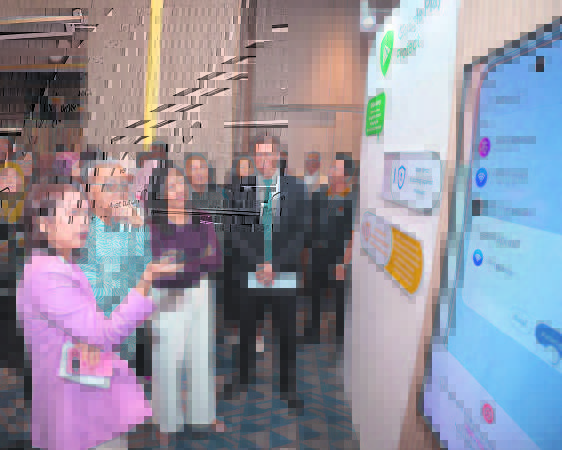
(Second from left) Fahmi, Deputy Minister of Communications Teo Nie Ching and King during sandbox installation of Play Protect
Safe Digital Experience
Google Malaysia MD Ben King said the rollout reflects Google’s broader commitment to embedding safety into every layer of the digital ecosystem as Malaysia advances in artificial intelligence (AI) adoption.
“As Malaysia advances with AI, creating a safe digital experience for every Malaysian becomes more critical than ever.
“While we have introduced new products and programmes to tackle scams, we understand that these threats are always evolving, and we remain committed to staying ahead of these risks by innovating our AI-powered defences,” he said.
He added that the company is also investing in nationwide digital literacy initiatives to empower users with the knowledge needed to recognise and respond to emerging threats.
Beyond device-level protection, Google is strengthening accountability across its platforms through stricter verification measures aimed at limiting the ability of bad actors to operate anonymously.
Under the Android Developer Verification programme, all developers distributing apps on certified Android devices will be required to verify their identities by 2027, creating a more transparent and secure app ecosystem.
Meanwhile, the Financial Services Verification policy, enforced from April this year, requires advertisers promoting financial products to be verified by regulators such as Bank Negara Malaysia (BNM) and the Securities Commission Malaysia (SC) before running ads.
This is expected to significantly reduce the prevalence of fraudulent financial promotions, which have become a common entry point for scams.
The urgency of these measures is emphasised by the scale of financial losses linked to online scams in Malaysia, which have reached nearly RM2.9 billion in recent years.
Fahmi said such figures represent more than just economic losses, highlighting the broader societal impact of scams on ordinary Malaysians.
“Imagine how much ordinary Malaysians’ lives have been affected or stolen through scams,” he said.
He added that the government’s efforts to expand Internet access, with coverage now reaching almost the entire population, must be matched with equally robust safety measures.
“There is no point in getting more people connected if their online experience is not secure,” he said.
Malaysia’s rapid digitalisation, including the rollout of high-speed Internet and 5G networks, has created new opportunities for growth, but also expanded the attack surface for cybercriminals.
Officials warned that scammers are becoming increasingly sophisticated, using advanced techniques such as social engineering, impersonation and malware to exploit users’ trust and emotions.
These tactics often create a sense of urgency or fear, prompting victims to act quickly without fully assessing the risks.
Fahmi also highlighted the importance of understanding the human dimension of scams that victims often experience not only financial loss but also emotional distress and stigma.
In many cases, victims are reluctant to report incidents, which means official figures may underestimate the true scale of the problem.
Recognising that technology alone cannot solve the problem, Google is complementing its security features with large-scale digital literacy initiatives aimed at building resilience among users.
One of the flagship efforts is the “Be Scam Ready” interactive game, which will be launched in Bahasa Malaysia in the third quarter of 2026 (3Q26).
The game immerses users in simulated real-world scenarios, helping them develop the critical thinking skills needed to identify and avoid scams.
It forms part of the broader Scam Ready ASEAN programme, supported by Google.org with US$5 million (RM19.75 million) in funding, which aims to strengthen scam awareness and prevention across the region.
In Malaysia, the initiative is expected to reach over 200,000 people through training sessions, awareness campaigns and community outreach programmes.
The programme adopts a train-the-trainer approach, equipping community leaders with the tools and knowledge needed to educate others, particularly vulnerable groups such as youths and senior citizens.
Google’s South-East Asia head of Government Affairs and Public Policy Yinghui Tng said the growing sophistication of scams requires a more holistic approach that combines technology, education and collaboration.
“Today, our phones are our wallets, our offices and our lifelines but as our digital dependency grows, so do vulnerabilities.
“Malicious actors are highly sophisticated and make dangerous actions seem completely rational in the heat of the moment, which is why we need both advanced protection and informed users,” she said.
She added that Google is increasingly leveraging AI to provide real-time alerts for suspicious calls, messages and app activity, while ensuring that user privacy remains protected.
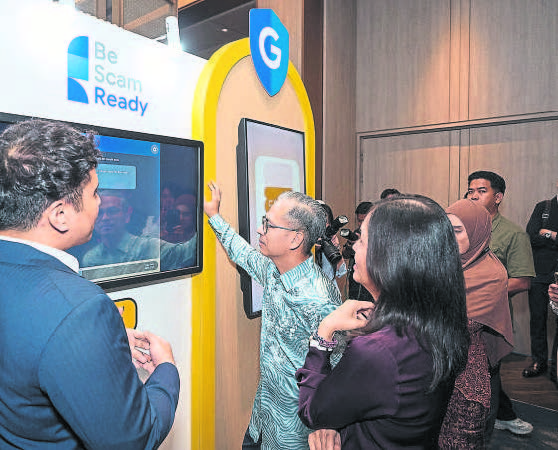
One of the flagship efforts is the ‘Be Scam Ready’ interactive game, which will be launched in Bahasa Malaysia in 3Q26
CSOs and Academia
The dialogue also featured a panel discussion titled “CSOs and Academia: Role and Solutions to Protecting Users”, which examined how civil society organisations (CSOs) and academic institutions can contribute to a safer digital environment.
Panellists stressed that scams have evolved into sophisticated forms of content that rely on storytelling, manipulation and amplification, making them more difficult to detect and counter.
Communications and Multimedia Content Forum of Malaysia CEO Mediha Mahmood said addressing this challenge requires a shift in perspective.
“Scams today operate like any other form of content, they are crafted, amplified and designed to influence behaviour. This means the response must also evolve, involving not just enforcement but also responsible content practices and public awareness,” she said.
Experts highlighted that one of the biggest challenges remains underreporting, as many victims feel embarrassed or unsure of where to seek help.
They called for clearer, more accessible reporting mechanisms, as well as stronger coordination between agencies to ensure timely response and support.
At the same time, discussions emphasised the importance of adopting a human-centred approach to policy and enforcement.
Civil society representatives argued that measures to combat scams must be carefully balanced with the protection of fundamental rights, including privacy and freedom of expression.
They noted that overly restrictive regulations could have unintended consequences, such as limiting access to information or stifling legitimate online activity.
The panel also highlighted the need for regional cooperation, as many scam operations are transnational in nature and exploit differences in regulatory frameworks across countries.
Collaboration between governments, technology companies and civil society was identified as essential to addressing these cross-border challenges effectively.
Nacsa chief executive Ir Dr Megat Zuhairy Megat Tajuddin said strengthening cyber security requires a comprehensive, multi-layered approach that involves all segments of society.
“Safeguarding our national cyberspace requires a whole-of-society approach, and industry-led efforts that enhance user protection contribute to strengthening Malaysia’s overall cyber resilience,” he said.
Speakers at the event repeatedly stressed that no single entity, whether government, industry or civil society, can tackle the issue alone.
Instead, they called for sustained collaboration, information sharing and joint action to stay ahead of rapidly evolving threats.
Fahmi also stressed the importance of empathy and support for victims with the psychological impact of scams is often overlooked.
“We must not lose sight of the human impact behind the numbers,” he said.
As Malaysia continues its journey towards becoming a digitally driven economy, building trust will be essential to ensuring that the benefits of technology are widely shared.
The rollout of enhanced fraud protection, combined with stricter verification measures and expanded education initiatives, represents a significant step in that direction.
However, experts caution that the fight against scams is far from over, as cyber-criminals continue to adapt and exploit new technologies.
Ultimately, safeguarding users will depend not only on innovation and regulation, but also on the collective efforts of individuals, communities and institutions working together to create a safer digital future.
- This article first appeared in The Malaysian Reserve weekly print edition
The post Google launches enhanced Play Protect to combat online scams appeared first on The Malaysian Reserve.



 View original content to download multimedia:https://www.prnewswire.com/news-releases/ownwell-and-san-antonio-spurs-honor-2025-26-community-champions-and-expand-property-tax-education-across-bexar-county-302771581.html
 View original content:https://www.prnewswire.com/news-releases/as-demand-for-less-invasive-breast-augmentation-surges-aesthetx-expands-access-to-motiva-preserve-across-the-bay-area-302771582.html


 View original content to download multimedia:https://www.prnewswire.com/news-releases/florida-returns-to-the-marche-du-film-with-florida-day-at-the-filmusa-pavilion-302771572.html



 View original content to download multimedia:https://www.prnewswire.com/news-releases/quaker-houghton-announces-quarterly-dividend-and-250-million-stock-repurchase-authorization-302771549.html





 View original content to download multimedia:https://www.prnewswire.com/news-releases/trulieve-announces-proposed-domestication-from-british-columbia-to-delaware-302771541.html

 View original content to download multimedia:https://www.prnewswire.com/news-releases/gfl-environmental-inc-announces-results-from-annual-and-special-meeting-of-shareholders-302771543.html