
Auto Added by WPeMatico
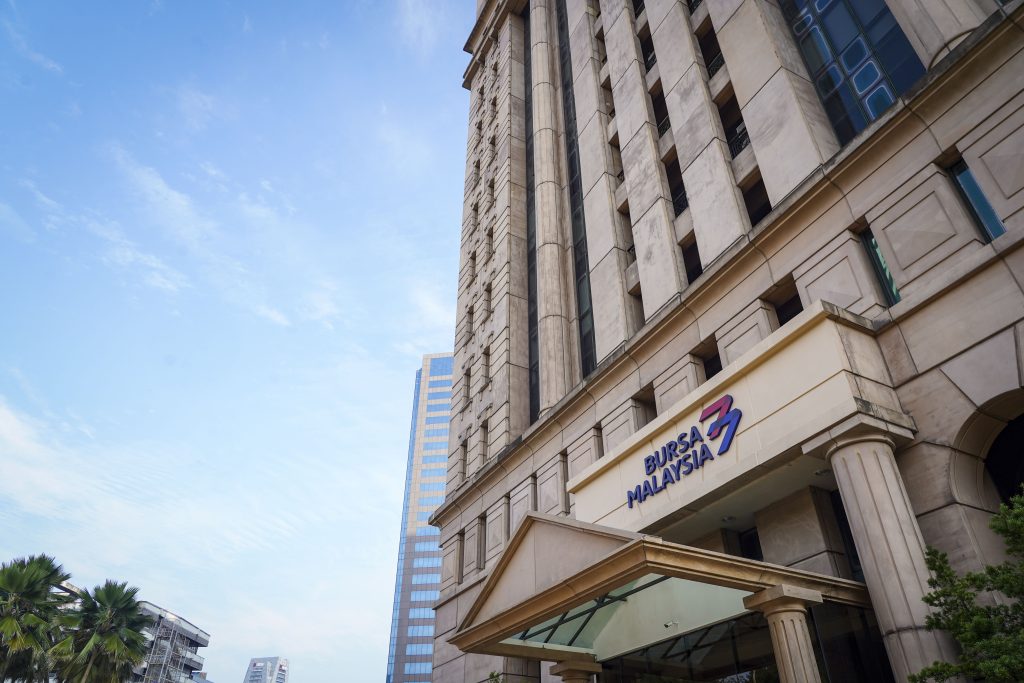

KUALA LUMPUR — Bursa Malaysia ended marginally lower on Monday as ongoing geopolitical tensions in West Asia continued to weigh on market sentiment.
At 5pm, the FTSE Bursa Malaysia KLCI (FBM KLCI) eased 2.29 points or 0.14 per cent to 1,696.56 from last Friday’s close of 1,698.85.
The market bellwether opened 2.44 points lower at 1,696.41, and fluctuated between 1,688.46 and 1,701.18 throughout the day.
Market breadth was negative with losers surpassing gainers 619 to 402. A total of 499 counters were unchanged, 1,162 untraded, and 21 suspended.
Turnover declined to 2.38 billion units worth RM2.56 billion from last Friday’s 2.87 billion units worth RM3.45 billion.
Rakuten Trade Sdn Bhd vice-president of equity research Thong Pak Leng said regional markets were mixed as investors remained cautious over the economic implications of the escalating conflict involving the United States (US), Israel and Iran, which has disrupted energy flows and heightened global geopolitical risks.
“Brent crude oil remained above US$100 per barrel amid persistent concerns over potential supply disruptions in the Gulf region.
The benchmark index’s relatively flat performance reflects a wait-and-see stance among investors, who are balancing the sustained war premium in crude oil against the risk of a prolonged conflict,” he told Bernama.
Nonetheless, Thong said gains in plantation stocks helped cushion the downside.
“As such, we anticipate the FBM KLCI to move range bound between 1,690 and 1,720 for the week,” he added.
IPPFA Sdn Bhd director of investment strategy and country economist Mohd Sedek Jantan said market volatility remains elevated at the start of the week as investors continue to assess the third week of conflict involving the US, Israel and Iran, with energy markets still acting as the main transmission channel into broader financial markets.
“Oil prices remaining above US$100 reinforce concerns that the conflict could keep inflationary pressures elevated, prompting investors to stay cautious toward risk assets and leaving markets highly sensitive to geopolitical developments,” he said.
At the time of writing, Brent crude rose 2.50 per cent to US$105.70 per barrel.
Among heavyweights, Maybank added 16 sen to RM11.48, Public Bank and CIMB went up 1.0 sen each to RM4.80 and RM7.80, IHH Healthcare was 6.0 sen firmer at RM8.89, while Tenaga Nasional edged down 2.0 sen to RM14.18.
On the most active list, Zetrix AI rose 2.5 sen to 77.5 sen, Pharmaniaga put on 1.0 sen to 25.5 sen, Tanco slid 12 sen to RM1.38, and OCR and Velesto Energy fell half-a-sen each to 4.5 sen and 32.5 sen.
Top gainers included United Plantations which added 70 sen to RM33.26, Petronas Dagangan increased 64 sen to RM21.90, Malayan Cement climbed 47 sen to RM6.62, Concrete Engineering Products surged 40 sen to RM1.75, and Malaysian Pacific Industries garnered 36 sen to RM29.98.
As for the top losers, Apollo Food gave up 32 sen to RM5.57, PPB Group decreased 26 sen to RM11.14, Allianz Malaysia slipped 24 sen to RM21.16, Nestle lost 20 sen to RM102.20, and Petronas Chemicals shed 17 sen to RM4.58.
On the index board, the FBM Top 100 Index fell 19.88 points to 12,229.54, the FBM Emas Index slipped 21.06 points to 12,384.77, the FBM 70 Index dipped 43.12 points to 16,988.82, the FBM Emas Shariah Index slid 21.91 points to 12,108.01, and the FBM ACE Index gave up 1.31 points to 4,374.49.
By sector, the Financial Services Index erased 6.43 points to 20,411.83, the Industrial Products and Services Index inched down 0.25 of-a-point to 175.02, and the Energy Index dropped 8.14 points to 788.96, while the Plantation Index soared 73.64 points to 8,517.83.
The Main Market volume declined to 1.41 billion units valued at RM2.40 billion from 1.71 billion units valued at RM3.24 billion last Friday.
Warrants turnover dwindled to 789.97 million units worth RM98.84 million from 895.71 million units worth RM109.71 million previously.
The ACE Market volume shrank to 178.31 million units valued at RM65.38 million from 255.45 million units valued at RM98.65 million previously.
Consumer products and services counters accounted for 201.37 million shares traded on the Main Market, industrial products and services (254.08 million), construction (150.75 million), technology (132.40 million), financial services (78.70 million), property (173.44 million), plantation (34.97 million), real estate investment trusts (25.99 million), closed-end fund (12,900), energy (129.62 million), healthcare (104.17 million), telecommunications and media (37.50 million), transportation and logistics (53.37 million), utilities (36.85 million), and business trusts (170,300). — BERNAMA
The post Bursa Malaysia ends marginally lower as West Asia conflicts weigh on market sentiment appeared first on The Malaysian Reserve.